The CSIRO Wild Watch results are in

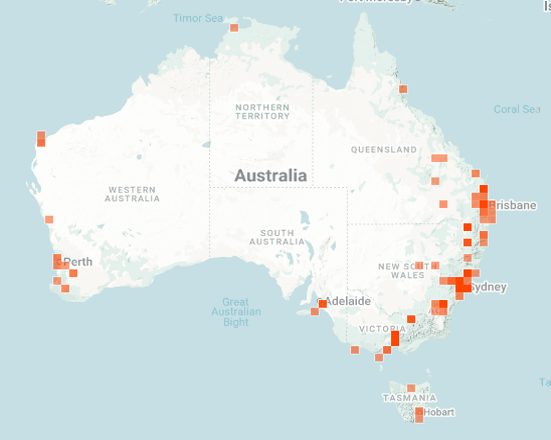
CSIRO Wild Watch included 442 schools, 1,667 individuals and 719 organisations including tertiary institutions, community groups including Girl Guides and Scouts, homeschools, government organisations, collectively across all states and territories.
Our Wild Watch project in iNaturalist recorded 9,288 observations, covering an amazing 2,894 species from across Australia.
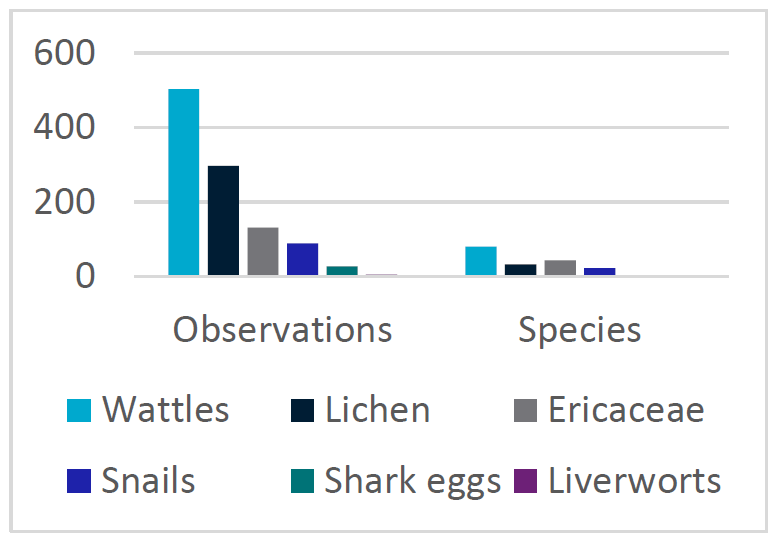
Wattles made it into the top ten most observed species, twice, making it the most observed priority species during Wild Watch.
Our terrestrial snails were also well represented in observations and yielded some significant findings which are covered in further detail below.
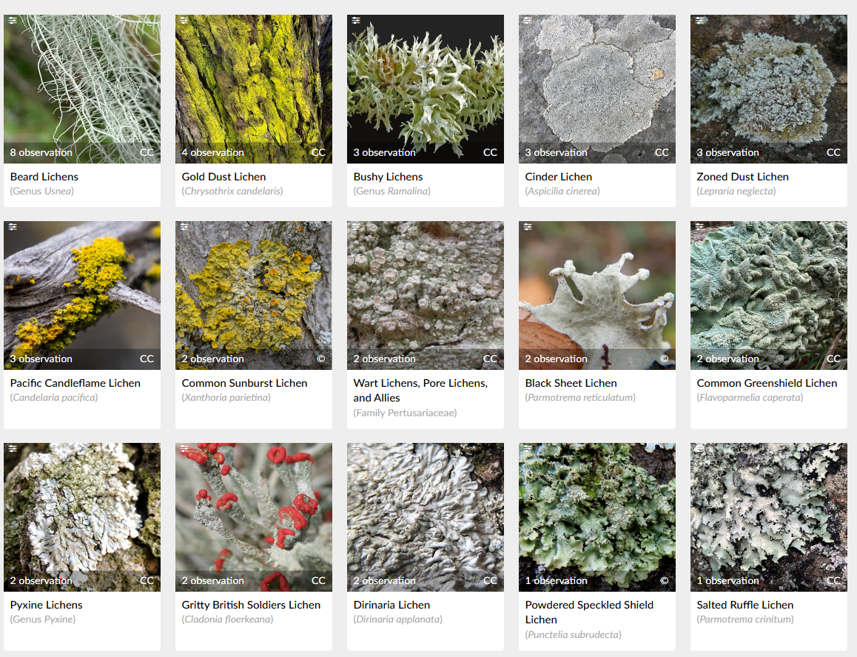
Tasha James from the Australian Tree Seed Centre confirmed that new location information for Acacia species observed during Wild Watch will assist with replacing low seed stocks and confirm the accuracy of their current location records.
Principal Researcher at the Australian National Herbarium, Cecile Gueidan, said that location information for Sunburst Lichen Xanthoria coomae/parietina partly confirms that the species does not occur in QLD. A total of 297 observations of Lichen were uploaded making it our second most observed Wild File.
Helen Kennedy, Identifications and Living Collections Botanist with the Centre for Australian National Biodiversity Research, shared with us a still to be confirmed observation of the Ericacaceae Acrothamnus melaleucoides in Mt Byron QLD which looks to have been observed in a new location, potentially extending the known range of this species.
The Cumberland Plain Land Snail Sauroconcha corneovirens was observed in Sydney NSW and is endangered globally.
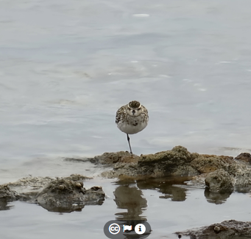
The Pacific Golden Plover Pluvialis fulva was observed in Manly QLD where it is listed as threatened.
Species with few prior uploads to iNaturalist include Notocochlis subcostata (a member of the Moon Snails family) found in Sydney NSW, Leptoctenus algalenoides found in Cooloola QLD, and Coleus leiperi (which is also vulnerable globally) found in Mt Byron QLD.
Some species with few prior records in the Atlas of Living Australia include Ochre Basket Trametes ochracea found in Highfields and Menai NSW, Gumtree Deceiver Laccaria fraterna found at six locations across VIC and NSW, and Ivy-leaved Toadflax Cymbalaria muralis found in Adelaide SA.
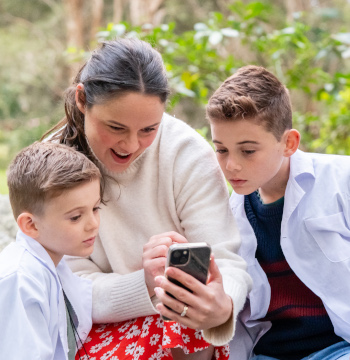
Survey results indicate that CSIRO Wild Watch succeeded in broadening awareness of CSIRO's research and fostered meaningful participation in biodiversity monitoring.
This initiative demonstrated strong engagement, national reach, and positive feedback, though areas for improvement were also identified. We hope to see you again for the next CSIRO National Science Experiment in 2026.