MNF Subscriber eNewsletter | May 2026

Welcome to the May edition of the CSIRO Marine National Facility (MNF) newsletter.
The past few months have been a significant period for the MNF, spanning the application calls for both Primary and Supplementary voyages and the commencement of four voyage delivery activities. Primary Applications for sea time on Australia’s dedicated ocean research vessel, RV Investigator, opened in February and closed last week. I would like to thank all applicants for their time taken in developing and submitting high quality project proposals.
As we look ahead, the MNF team and our independent committees will now undertake a review of applications to ensure the MNF continues to deliver maximum national benefit. These are thorough assessments informed by national and international marine research expertise, and announcement of the successful applicants from the Primary Application Call is expected by January 2027.
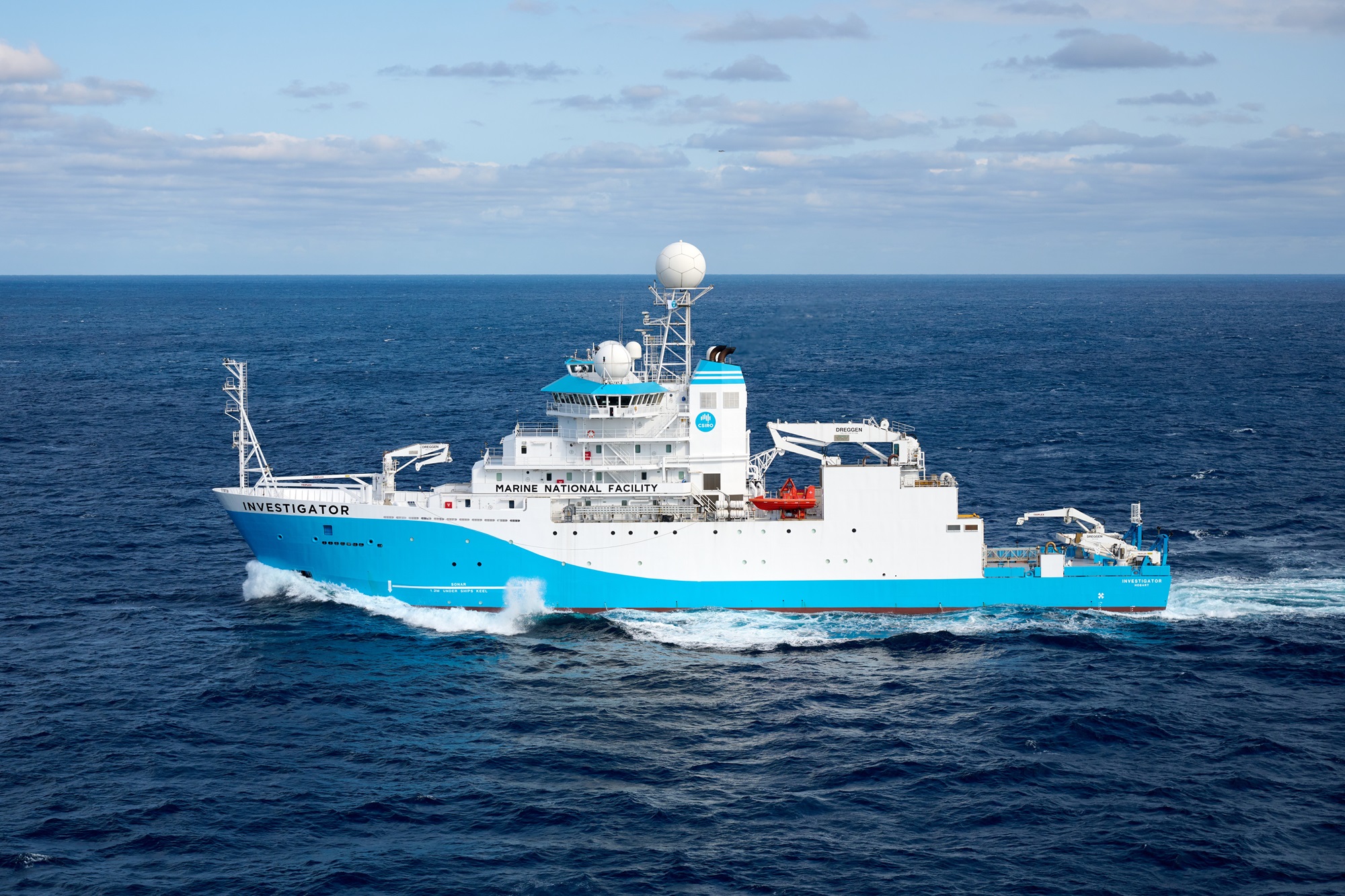
While planning continues shoreside, RV Investigator has been delivering significant impact at sea. Recent voyages have demonstrated the breadth and value of this national research capability, from the Southern Ocean to Australia’s tropical reefs and vast offshore waters. Notably, our voyage to Antarctica led by Dr Linda Armbrecht from the University of Tasmania’s Institute for Marine and Antarctic Studies (IMAS) supported critical research at the interface of ocean, climate and ice systems, providing data that underpins Australia’s understanding of environmental change in one of the world’s most sensitive regions.
Back in mainland waters, research undertaken off the Ningaloo Coast led by Professor Nicole Jones from the University of Western Australia has advanced our knowledge of coastal and reef processes, supporting the sustainable management of one of Australia’s most iconic marine environments. These efforts were further underscored by the successful avoidance of Tropical Cyclone Narelle during operations, demonstrating both the resilience of RV Investigator and the capability of the teams at sea to adapt safely in dynamic conditions.
In its 20th anniversary year, our important partnership with Australia's Integrated Marine Observing System (IMOS) in maintaining the Southern Ocean Time Series facility is also highlighted in this newsletter.
Further supporting development of Australia’s marine research capabilities, the CAPSTAN sea training voyage in April-May played an important role in developing our next generation of marine experts. This program, delivered by a partnership between CSIRO, IMAS and the Australian and New Zealand International Scientific Drilling Consortium (ANZIC), is providing invaluable hands-on experience at sea to build the skills, expertise and networks needed to better ensure the sustainable management and protection of Australia's vast marine territory.
The energy and enthusiasm for marine science from both students and trainers involved in the CAPSTAN program is infectious and inspiring! I congratulate all who are contributing to the success of this unique program and encourage students and universities to look at the incredible opportunities it offers for professional and personal development.
Complementing our research and training outcomes, RV Investigator continues to offer a powerful tool for engagement with our community as visible, trusted national infrastructure. During April, we were pleased to offer vessel tours for stakeholders while in Fremantle, Western Australia. These visits provided an opportunity to showcase Australia’s world-leading ocean research capability to government representatives, partners and beneficiaries of the research we enable, reinforcing the value of sustained investment in marine research infrastructure and our expert teams who operate it.
Looking ahead, the MNF will also be reflecting on impact through community and scientific engagement. Later this year, we will convene a dedicated MNF symposium at the 2026 Australian Marine Sciences Association (AMSA) Conference, marking a decade of operation of RV Investigator. Titled Marine Research for National Benefit: A Decade of Australia’s Dedicated Ocean Research Vessel Investigator, the symposium will highlight the outcomes and impact enabled by MNF capability, spanning oceanographic, biological, geoscience and atmospheric research, as well as maritime heritage studies.
Together, these activities reinforce the central role of the MNF as collaborative national research infrastructure, delivering outcomes that address Australia’s environmental, economic and societal challenges, and building capability for the future through training, data access and partnerships. Thank you for your continued support and active engagement with the MNF. Whether you are planning research, preparing for sea, delivering projects or contributing to the many support roles that make our work possible, your efforts are integral to delivering marine research for national benefit.
With that, I'm pleased to share the latest MNF newsletter with you and hope you find the content informative and useful. For all those heading to sea, I wish you safe and successful voyages with fair winds and following seas.
Toni Moate
MNF Director

Marine researchers, led by CSIRO and the Nippon Foundation-Nekton Ocean Census, have discovered more than 110 new marine species in the largely unexplored deep waters of the Coral Sea Marine Park.
The discoveries add to the ever-growing list of species new to science that researchers have described with the help of RV Investigator.

