MNF Subscriber eNewsletter | August 2026

Welcome to the August edition of the CSIRO Marine National Facility (MNF) newsletter.
With the 2026 Australian Marine Sciences Association (AMSA) Conference currently underway, I wanted to take this opportunity to reflect on this year’s conference theme: Marine Science with Impact. Delivering impact is at the core of the MNF’s work and the collaborative research we deliver with our partners. It starts with our application process for sea time and is reflected in the criteria of research excellence and national benefit used to assess project value and merit. It informs the deliberations of our independent advisory committees and the advice from our scientific, industry and government experts on the MNF Steering Committee. It drives the research we do at sea, as well as equally important education, training and capability development activities. Then it crystallises through the datasets, outputs, knowledge and understanding generated that inform attitudes, actions and decision-making by our community, industries and government.
The hard part is trying to identify all the places where the impact of our work spreads. For some of our work, the impact is ongoing through the sustained ocean and atmosphere observations we deliver that furnish greater understanding of our marine environment. Future additional uses of previously collected data and its impact may be unknown to us today, but will be revealed in the years ahead as the publicly accessible datasets we provide are translated into knowledge in projects and ways we haven’t yet considered. While the full extent of our impact may be hard to capture at one point in time, I know that, at all levels of our operations, our people, partners and collaborators are mindful of the important work we are all engaged in.
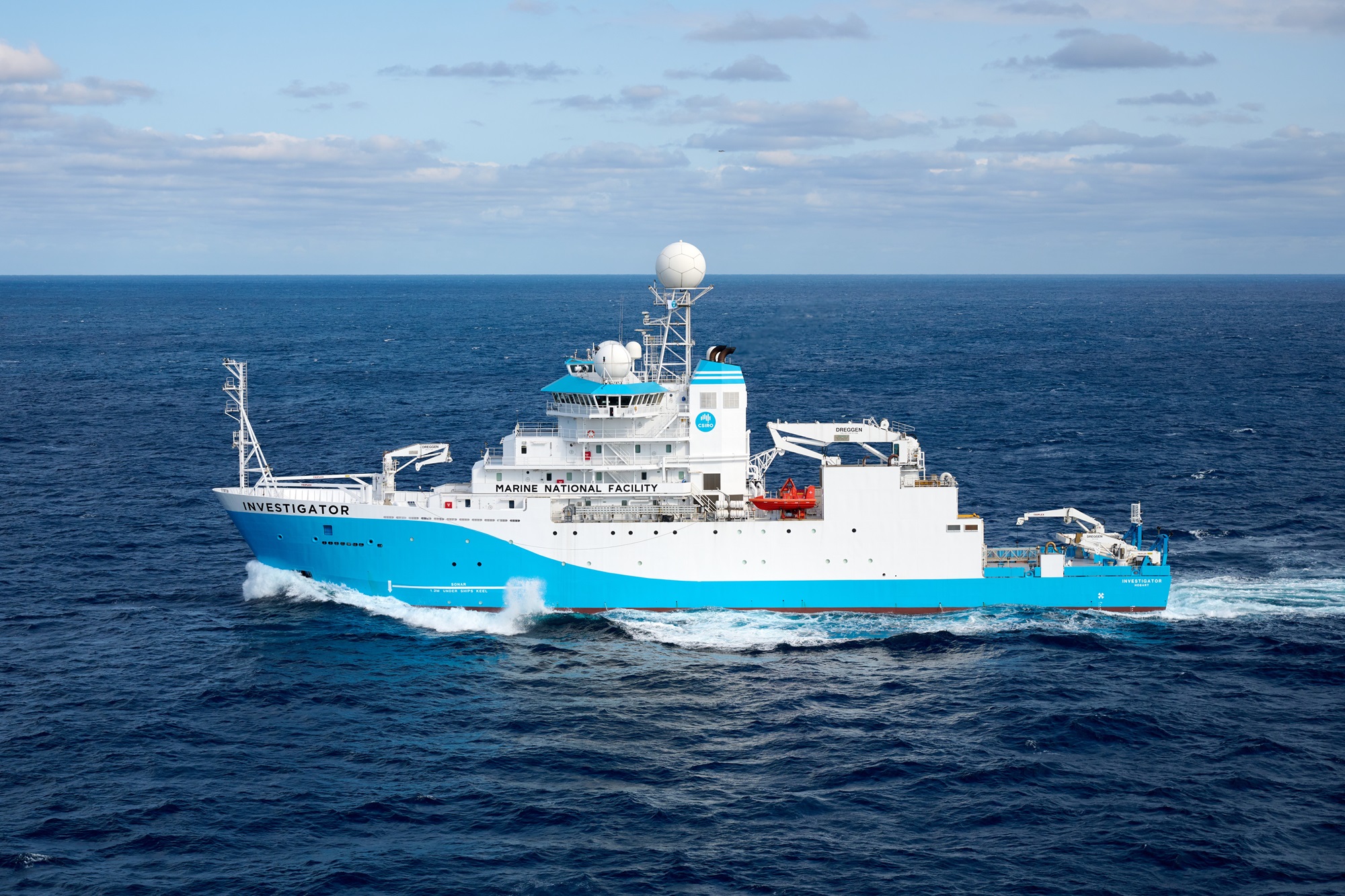
At the 2026 AMSA Conference, we look forward to connecting with the research and wider community to discuss, share and promote the story of our research and its impact. You can find out more about our activities at the conference, including the dedicated MNF symposium to share a decade of impact delivered by CSIRO research vessel (RV) Investigator, in this newsletter.
On a similar theme, the MNF has recently created wider pathways to gather feedback from our ship users and community about the scientific capabilities we need to support diverse research needs and deliver greatest impact. This includes launching the MNF Technology and Innovation Advisory Group (TIAG) which, over the past two years, has invited direct feedback on future capability needs via a community survey. This survey has now closed and I want to thank all who took the time to provide submissions. Your input and collaboration in our capability enhancement program through the TIAG will help inform future capability planning and ensure the MNF continues to meet the evolving needs of Australia's marine research community.
You will find the theme of impact and collaboration continuing throughout this newsletter, which includes updates from the latest meeting of the MNF Steering Committee, articles, stories and announcements about recent and underway voyages, and opportunities to make greater contributions to the work and success of the MNF. I hope you find the content informative and valuable, and it gives you pause to reflect on the importance and impact of this collective work.
To all those joining us aboard RV Investigator, including those on the underway voyage in the Coral Sea, I wish you successful voyages with fair winds and following seas. Thank you for your ongoing contribution and support.
Toni Moate
Director, CSIRO Marine National Facility

Around 65,000 years ago, sea levels were around 80 metres lower than present day and the southern Great Barrier Reef was a vast coastal plain bordered by towering forests that stretched inland.
Australian scientists and Traditional Owners of Sea Country have recently returned from a voyage of discovery to help tell the story of the past, present and future of the southern Great Barrier Reef.