
As part of our commitment to meeting both the current and future needs of the Australian marine research community, the Marine National Facility (MNF) has established the Technology and Innovation Advisory Group (TIAG).
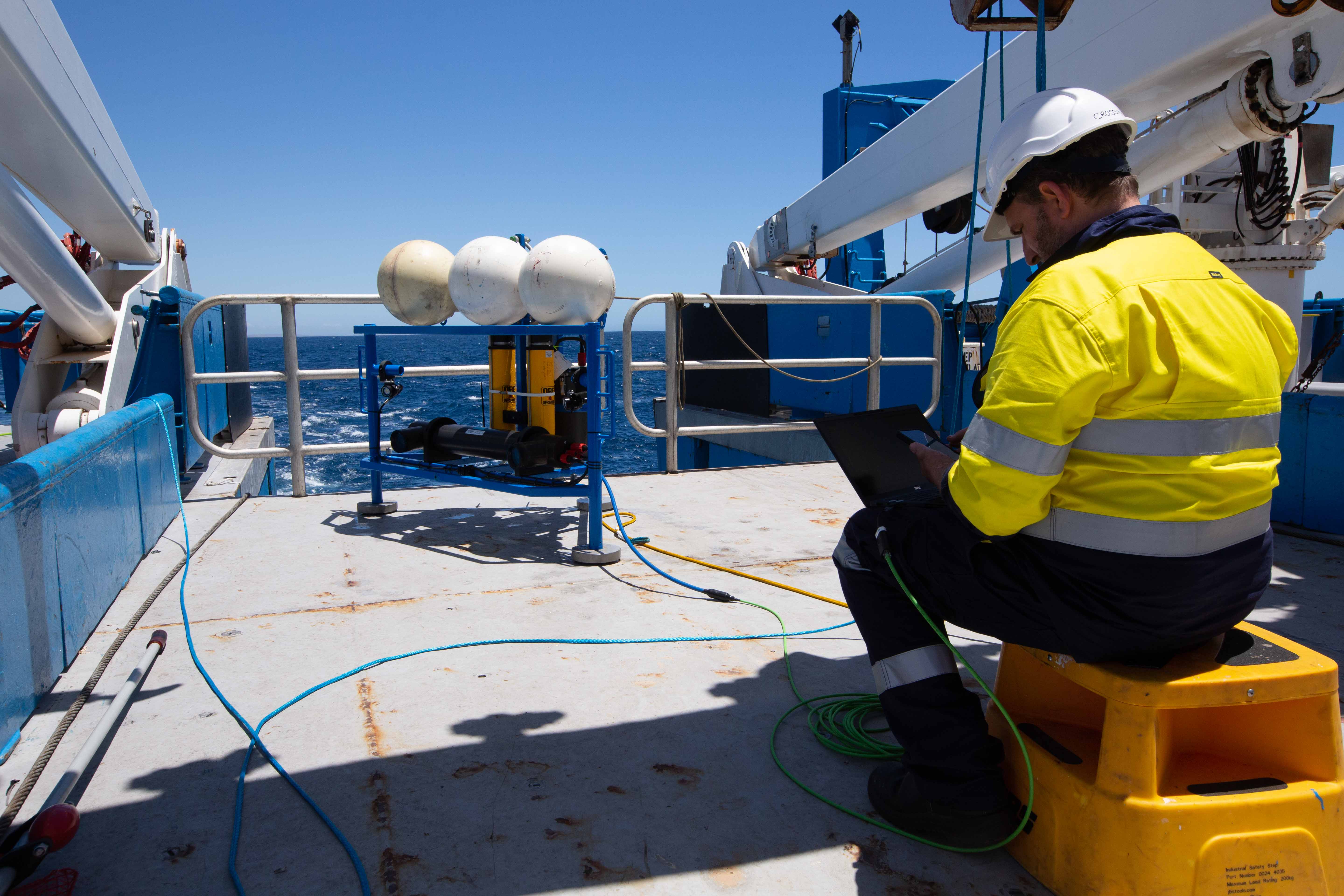 The purpose of this group is to provide the MNF with subject matter expertise on current and future technology advancements with the goal of continuously improving capabilities supplied to the research community by the MNF.
Additionally, TIAG will be a vital tool in representing the views of the broader science community on leading practice methodologies, technology advancements and future marine research requirements in relevant fields.
TIAG will support the MNF in finding opportunities for collaboration and equipment sharing to improve ocean research capability with other marine research institutions in the region including government agencies, research institutions and philanthropic organisations.
TIAG schedule
TIAG was established by the MNF in August 2024 to coincide with the start of the middle of life refit (Mid-Life Refit) Project of CSIRO research vessel (RV) Investigator. An invitation was extended to nominated stakeholders with a wide spread of expertise to become part of this special advisory group.
Membership of TIAG was finalised and endorsed in September 2024.
Following this, TIAG held its inaugural meeting to determine its meeting schedule to help inform priorities for scientific upgrades for the MNF in 2025/26 and 2026/27. It was agreed that TIAG will meet 3-4 times each year on an ongoing basis.
TIAG membership
TIAG is convened through virtual meetings and chaired by CSIRO’s Dr Ilona Stobutzki who is the Science Director for the National Collections and Marine Infrastructure research unit.
TIAG includes representation from the Ship Management Program and Engineering and Technology teams, both of which support the MNF and operations of RV Investigator.
As at September 2026, the members of TIAG are:
Dr Ilona Stobutzki is the Science Director and Deputy Director of CSIRO National Collections and Marine Infrastructure (NCMI) research unit. Her research background is in marine ecology and fisheries science, including data poor fisheries, ecological risk assessment and approaches to assessing fisheries status. Her focus is research for decision-makers, leading multi-disciplinary research programs in partnership with managers, policy developers, industry and community stakeholders. She has worked at the science-policy interface across fisheries, forestry, biosecurity risk assessment and land-use management. She has extensive experience in international fisheries and worked and lived in South-East Asia.
Ian McRobert is an interdisciplinary systems engineer specialising in scientific instrumentation systems for harsh environments and leads CSIRO’s Marine Technical Operations Group within the Engineering and Technology Program. For RV Investigator, he has contributed to the development of a wide range of scientific systems, including its Global Atmosphere Watch (GAW) Regional Station, which monitors atmospheric composition to support climate research. Ian’s extensive field experience includes 25 voyages on RV Investigator<, as well as commissioning some of the first operational telescopes for CSIRO’s Australian Square Kilometre Array Pathfinder, a world-leading radio astronomy project in outback Western Australia.
Dr Joel Alroe is a lecturer and researcher in atmospheric physics at the School of Earth and Atmospheric Sciences, Queensland University of Technology. His research focuses on the sources and climate-relevant properties of marine aerosols, with particular interest in aerosol–cloud interactions and atmospheric chemistry. He has extensive experience leading and supporting terrestrial and ship-based measurement campaigns, including in the Southern Ocean, Great Barrier Reef, and remote coastal sites around Australia. Joel has also collaborated on air quality studies focused on vehicle and wildfire emissions, and is actively involved in evaluating solar radiation management strategies aimed at enhancing coral resilience in the face of climate change.
Dr Robin Beaman is a marine geologist and ocean mapping scientist based at James Cook University in Cairns, leading efforts to reveal Australia’s vast underwater landscape. Ocean mapping improves our understanding of the geological origins and nature of the seafloor, the distribution of marine life, and contributes to managing Australia's marine jurisdiction. Robin has 30 years’ experience in marine geology research and multibeam mapping expeditions involving various academic institutes, government, industry, and philanthropy organisations. Research topics include the study of drowned (submerged) reefs and mesophotic (twilight) coral ecosystems, submarine canyons and sediment gravity flows, underwater landslides, and the deep-water marine life that inhabits these features.
Dr Ruhi Humphries is the lead coordinating scientist of RV Investigator’s Global Atmosphere Watch station, and a lead scientist for the aerosol programs on both RV Investigator and at Kennaook/Cape Grim. He has been working for over 15 years on understanding the role of aerosols in the Southern Ocean and Antarctic regions in the larger climate system. He has been involved in voyages aboard several research vessels and collaborates extensively with both Australian and international researchers.
Dr Taryn Noble is a Senior Research Fellow at the Institute for Marine and Antarctic Studies (IMAS), University of Tasmania, specialising in marine geochemistry and paleoceanography. Her research focuses on isotope geochemistry to understand Southern Ocean circulation, Antarctic Ice Sheet dynamics, and sediment provenance, with experience applying Nd, Sr, Pb, and Th isotope systems to marine archives. Dr Noble has led research teams in sediment coring and seawater sampling and participated in multiple oceanographic research voyages, working ~230 days at sea. She is passionate about contributing to the development and deployment coring systems and geochemical sampling techniques to build Australian capability in marine geosciences.
Dr Elizabeth Shadwick is a Chemical Oceanographer with expertise in the marine carbon cycle and distinguishing between natural variability and anthropogenic change. She has worked across many environments from the North Atlantic, to the Arctic, to the Southern Ocean. Her work is based on shipboard observations, laboratory analyses, autonomous sensors deployed on floats and moorings, and the outputs of biogeochemical models. Elizabeth leads the Ocean Carbon Observations Team, the IMOS Southern Ocean Time Series (SOTS) observatory, and co-leads the Australian Antarctic Program Partnership (AAPP) Biogeochemistry project.
Elizabeth is currently the Co-Chair of the Southern Ocean Observing System (SOOS) Indian Ocean Sector Regional Working Group and serves on the Executive Committee of the global OceanSITES network.
Prof. Iain Suthers is a professor at UNSW with expertise in fish, fisheries and biological oceanography. He received his PhD in 1989 from Dalhousie University, spending much of his time at the Bedford Institute of Oceanography. He has had various training and research voyages (17) on the Marine National Facility over 30 years (ORV Franklin, RV Southern Surveyor and RV Investigator), exploring the biological influence of eddies, sea mounts and shelf-slope canyons. We identified “Eddy Avenue” off the NSW coast – a region of intense eddy formation and dynamics that is critically important to SE Trawl fisheries, coastal economies and climate.
Iain was the technical advisor (2011–2014) for the construction of RV Investigator in marine and fisheries biology. He served on committees for National Oil & Gas Decommissioning (2019–2022); and the BP–CSIRO Great Australian Bight research program (2014–2017). A Fulbright fellowship in 2022 enabled him to visit some cutting-edge facilities to monitor and observe zooplankton rates and larval fishes in real time. In 2024 he was awarded the K. Radway Allen award by the Australian Society for Fish Biology.
Prof. Stefan B. Williams is the Professor of Marine Robotics at the University of Sydney’s Australian Centre for Robotics (ACFR) where he leads the Marine research group. Stefan’s research over the past two decades has focused on marine robotic systems. He led Australia’s Integrated Marine Observing System Autonomous Underwater Vehicle (AUV) Facility, and has introduced fundamental new insights in the areas of navigation, planning, control and machine learning to allow these platforms to operate in challenging environments. In addition to contributions to the engineering sciences that underpin these advances, he has led major national programs aimed at introducing Autonomous Underwater Vehicle (AUV) systems in support of applications in ecology, archaeology and geoscience, developing close international networks of collaborators.
Stefan was the Head of School of Aerospace, Mechanical and Mechatronic Engineering from 2016–2021 and an ARC Future Fellow. He also leads the NSW Space Research Network (SRN). He has been awarded numerous distinctions for his work including the 2020 University of Sydney’s Vice Chancellor’s Award for Outstanding Teaching and Research, the 2019 Payne Scott Professorial Distinction and in 2018 he was awarded Distinguished Lecturer by the IEEE Oceanographic Engineering Society.
Dr Thomas Holmes is a chemical oceanographer at the Institute for Marine and Antarctic Studies (IMAS), University of Tasmania, specialising in trace metal biogeochemistry in the Southern Ocean. His research examines how trace metals influence the growth of phytoplankton and bacteria in the ocean and thus impact the global carbon cycle. Thomas is heavily involved in the GEOTRACES program (an international study of marine trace elements and isotopes) and is an inaugural member of their Early Career Scientist Committee.
Thomas has led and been part of trace metal sampling teams, spending 189 days at sea over five voyages. Four of these were aboard RV Investigator to locations including Heard and McDonald Islands, along the SR3 transect between Tasmania and Antarctica and along the Antarctic ice edge.
Dr Tim O'Hara has been a lead scientist with Museum Victoria since 2001 focusing on describing patterns of marine biodiversity over large spatial scales. He has built global distributional databases that hold hundreds of thousands of verified distribution records that are being used to map species assemblages and other biodiversity metrics across large areas of the marine environment. Tim's projects have generated extensive phylogenetic data that is being used to explore the origin, biogeography, dispersal and conservation of seafloor animals. His taxonomic speciality is echinoderms.
Tim has participated in numerous biodiversity surveys, including seafloor surveys aboard RV Investigator. He has been Chief Scientist on 3 MNF voyages, including the “Sampling the abyss” (IN2017_V03) voyage and two voyages to Australia’s Indian Ocean Territories (IN2021_V04, IN2022_V09). Tim was a Principal Investigator on voyage IN2025_V06 to the Coral Sea. These voyages deployed various benthic sampling devices, including demersal trawls, beam trawls, epibenthic sleds, box cores, CTDs, and deep towed cameras. The data from these voyages have been included in numerous scientific papers of international significance, including several in the prestigious journal Nature.
Terms of Reference
View the TIAG Terms of Reference
Meeting summaries
View the TIAG meeting summaries
Further information
For further information about the TIAG, please contact Dr Ilona Stobutzki
As part of our commitment to meeting both the current and future needs of the Australian marine research community, the Marine National Facility (MNF) has established the Technology and Innovation Advisory Group (TIAG).
The purpose of this group is to provide the MNF with subject matter expertise on current and future technology advancements with the goal of continuously improving capabilities supplied to the research community by the MNF.
Additionally, TIAG will be a vital tool in representing the views of the broader science community on leading practice methodologies, technology advancements and future marine research requirements in relevant fields.
TIAG will support the MNF in finding opportunities for collaboration and equipment sharing to improve ocean research capability with other marine research institutions in the region including government agencies, research institutions and philanthropic organisations.
TIAG schedule
TIAG was established by the MNF in August 2024 to coincide with the start of the middle of life refit (Mid-Life Refit) Project of CSIRO research vessel (RV) Investigator. An invitation was extended to nominated stakeholders with a wide spread of expertise to become part of this special advisory group.
Membership of TIAG was finalised and endorsed in September 2024.
Following this, TIAG held its inaugural meeting to determine its meeting schedule to help inform priorities for scientific upgrades for the MNF in 2025/26 and 2026/27. It was agreed that TIAG will meet 3-4 times each year on an ongoing basis.
TIAG membership
TIAG is convened through virtual meetings and chaired by CSIRO’s Dr Ilona Stobutzki who is the Science Director for the National Collections and Marine Infrastructure research unit.
TIAG includes representation from the Ship Management Program and Engineering and Technology teams, both of which support the MNF and operations of RV Investigator.
As at September 2026, the members of TIAG are:
Dr Ilona Stobutzki is the Science Director and Deputy Director of CSIRO National Collections and Marine Infrastructure (NCMI) research unit. Her research background is in marine ecology and fisheries science, including data poor fisheries, ecological risk assessment and approaches to assessing fisheries status. Her focus is research for decision-makers, leading multi-disciplinary research programs in partnership with managers, policy developers, industry and community stakeholders. She has worked at the science-policy interface across fisheries, forestry, biosecurity risk assessment and land-use management. She has extensive experience in international fisheries and worked and lived in South-East Asia.
Ian McRobert is an interdisciplinary systems engineer specialising in scientific instrumentation systems for harsh environments and leads CSIRO’s Marine Technical Operations Group within the Engineering and Technology Program. For RV Investigator, he has contributed to the development of a wide range of scientific systems, including its Global Atmosphere Watch (GAW) Regional Station, which monitors atmospheric composition to support climate research. Ian’s extensive field experience includes 25 voyages on RV Investigator<, as well as commissioning some of the first operational telescopes for CSIRO’s Australian Square Kilometre Array Pathfinder, a world-leading radio astronomy project in outback Western Australia.
Dr Joel Alroe is a lecturer and researcher in atmospheric physics at the School of Earth and Atmospheric Sciences, Queensland University of Technology. His research focuses on the sources and climate-relevant properties of marine aerosols, with particular interest in aerosol–cloud interactions and atmospheric chemistry. He has extensive experience leading and supporting terrestrial and ship-based measurement campaigns, including in the Southern Ocean, Great Barrier Reef, and remote coastal sites around Australia. Joel has also collaborated on air quality studies focused on vehicle and wildfire emissions, and is actively involved in evaluating solar radiation management strategies aimed at enhancing coral resilience in the face of climate change.
Dr Robin Beaman is a marine geologist and ocean mapping scientist based at James Cook University in Cairns, leading efforts to reveal Australia’s vast underwater landscape. Ocean mapping improves our understanding of the geological origins and nature of the seafloor, the distribution of marine life, and contributes to managing Australia's marine jurisdiction. Robin has 30 years’ experience in marine geology research and multibeam mapping expeditions involving various academic institutes, government, industry, and philanthropy organisations. Research topics include the study of drowned (submerged) reefs and mesophotic (twilight) coral ecosystems, submarine canyons and sediment gravity flows, underwater landslides, and the deep-water marine life that inhabits these features.
Dr Ruhi Humphries is the lead coordinating scientist of RV Investigator’s Global Atmosphere Watch station, and a lead scientist for the aerosol programs on both RV Investigator and at Kennaook/Cape Grim. He has been working for over 15 years on understanding the role of aerosols in the Southern Ocean and Antarctic regions in the larger climate system. He has been involved in voyages aboard several research vessels and collaborates extensively with both Australian and international researchers.
Dr Taryn Noble is a Senior Research Fellow at the Institute for Marine and Antarctic Studies (IMAS), University of Tasmania, specialising in marine geochemistry and paleoceanography. Her research focuses on isotope geochemistry to understand Southern Ocean circulation, Antarctic Ice Sheet dynamics, and sediment provenance, with experience applying Nd, Sr, Pb, and Th isotope systems to marine archives. Dr Noble has led research teams in sediment coring and seawater sampling and participated in multiple oceanographic research voyages, working ~230 days at sea. She is passionate about contributing to the development and deployment coring systems and geochemical sampling techniques to build Australian capability in marine geosciences.
Dr Elizabeth Shadwick is a Chemical Oceanographer with expertise in the marine carbon cycle and distinguishing between natural variability and anthropogenic change. She has worked across many environments from the North Atlantic, to the Arctic, to the Southern Ocean. Her work is based on shipboard observations, laboratory analyses, autonomous sensors deployed on floats and moorings, and the outputs of biogeochemical models. Elizabeth leads the Ocean Carbon Observations Team, the IMOS Southern Ocean Time Series (SOTS) observatory, and co-leads the Australian Antarctic Program Partnership (AAPP) Biogeochemistry project.
Elizabeth is currently the Co-Chair of the Southern Ocean Observing System (SOOS) Indian Ocean Sector Regional Working Group and serves on the Executive Committee of the global OceanSITES network.
Prof. Iain Suthers is a professor at UNSW with expertise in fish, fisheries and biological oceanography. He received his PhD in 1989 from Dalhousie University, spending much of his time at the Bedford Institute of Oceanography. He has had various training and research voyages (17) on the Marine National Facility over 30 years (ORV Franklin, RV Southern Surveyor and RV Investigator), exploring the biological influence of eddies, sea mounts and shelf-slope canyons. We identified “Eddy Avenue” off the NSW coast – a region of intense eddy formation and dynamics that is critically important to SE Trawl fisheries, coastal economies and climate.
Iain was the technical advisor (2011–2014) for the construction of RV Investigator in marine and fisheries biology. He served on committees for National Oil & Gas Decommissioning (2019–2022); and the BP–CSIRO Great Australian Bight research program (2014–2017). A Fulbright fellowship in 2022 enabled him to visit some cutting-edge facilities to monitor and observe zooplankton rates and larval fishes in real time. In 2024 he was awarded the K. Radway Allen award by the Australian Society for Fish Biology.
Prof. Stefan B. Williams is the Professor of Marine Robotics at the University of Sydney’s Australian Centre for Robotics (ACFR) where he leads the Marine research group. Stefan’s research over the past two decades has focused on marine robotic systems. He led Australia’s Integrated Marine Observing System Autonomous Underwater Vehicle (AUV) Facility, and has introduced fundamental new insights in the areas of navigation, planning, control and machine learning to allow these platforms to operate in challenging environments. In addition to contributions to the engineering sciences that underpin these advances, he has led major national programs aimed at introducing Autonomous Underwater Vehicle (AUV) systems in support of applications in ecology, archaeology and geoscience, developing close international networks of collaborators.
Stefan was the Head of School of Aerospace, Mechanical and Mechatronic Engineering from 2016–2021 and an ARC Future Fellow. He also leads the NSW Space Research Network (SRN). He has been awarded numerous distinctions for his work including the 2020 University of Sydney’s Vice Chancellor’s Award for Outstanding Teaching and Research, the 2019 Payne Scott Professorial Distinction and in 2018 he was awarded Distinguished Lecturer by the IEEE Oceanographic Engineering Society.
Dr Thomas Holmes is a chemical oceanographer at the Institute for Marine and Antarctic Studies (IMAS), University of Tasmania, specialising in trace metal biogeochemistry in the Southern Ocean. His research examines how trace metals influence the growth of phytoplankton and bacteria in the ocean and thus impact the global carbon cycle. Thomas is heavily involved in the GEOTRACES program (an international study of marine trace elements and isotopes) and is an inaugural member of their Early Career Scientist Committee.
Thomas has led and been part of trace metal sampling teams, spending 189 days at sea over five voyages. Four of these were aboard RV Investigator to locations including Heard and McDonald Islands, along the SR3 transect between Tasmania and Antarctica and along the Antarctic ice edge.
Dr Tim O'Hara has been a lead scientist with Museum Victoria since 2001 focusing on describing patterns of marine biodiversity over large spatial scales. He has built global distributional databases that hold hundreds of thousands of verified distribution records that are being used to map species assemblages and other biodiversity metrics across large areas of the marine environment. Tim's projects have generated extensive phylogenetic data that is being used to explore the origin, biogeography, dispersal and conservation of seafloor animals. His taxonomic speciality is echinoderms.
Tim has participated in numerous biodiversity surveys, including seafloor surveys aboard RV Investigator. He has been Chief Scientist on 3 MNF voyages, including the “Sampling the abyss” (IN2017_V03) voyage and two voyages to Australia’s Indian Ocean Territories (IN2021_V04, IN2022_V09). Tim was a Principal Investigator on voyage IN2025_V06 to the Coral Sea. These voyages deployed various benthic sampling devices, including demersal trawls, beam trawls, epibenthic sleds, box cores, CTDs, and deep towed cameras. The data from these voyages have been included in numerous scientific papers of international significance, including several in the prestigious journal Nature.
Terms of Reference
View the TIAG Terms of Reference
Meeting summaries
View the TIAG meeting summaries
Further information
For further information about the TIAG, please contact Dr Ilona Stobutzki