Blog icon

About

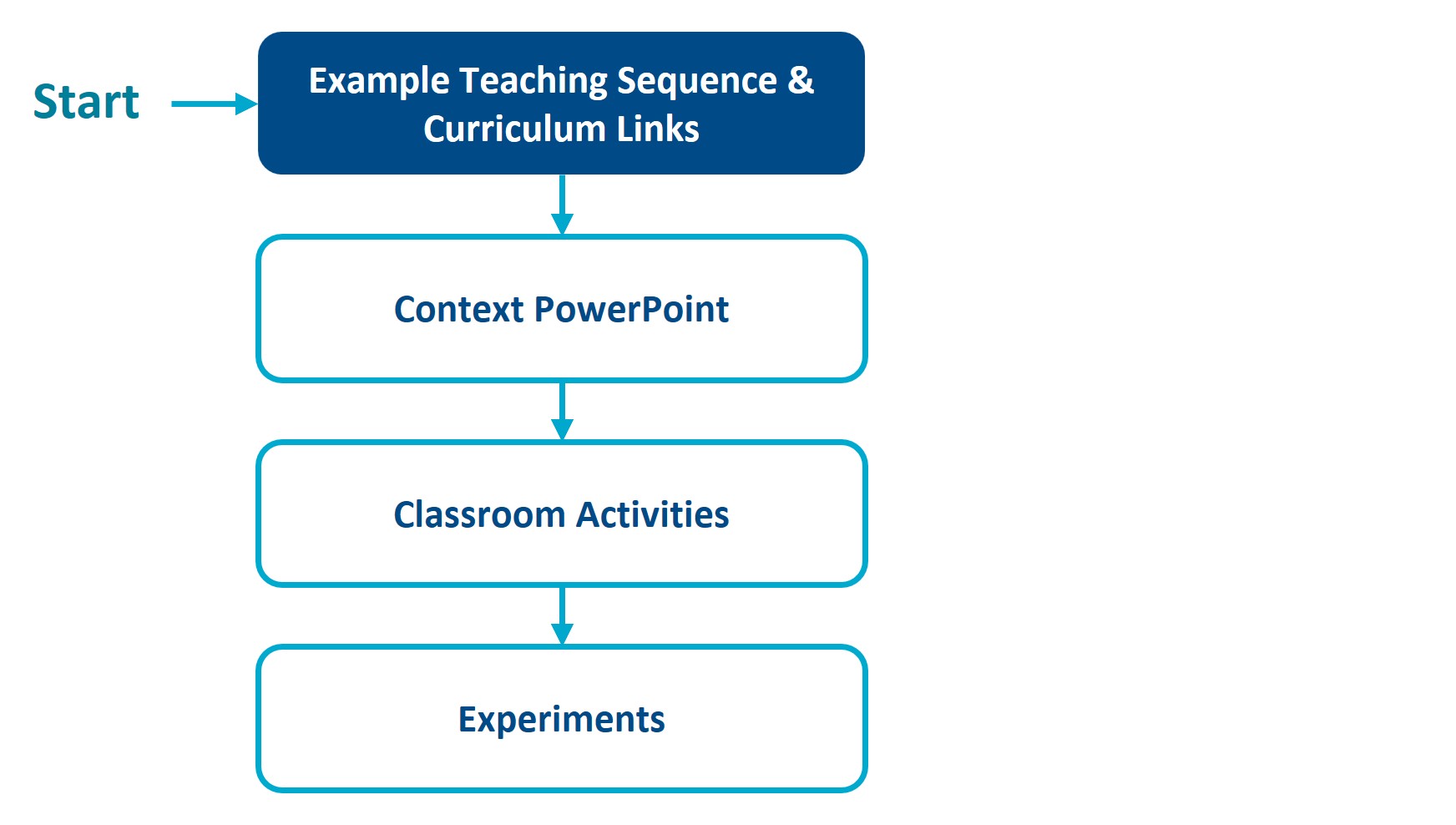
Aboriginal and/or Torres Strait Islander Peoples have used traditional separation techniques for thousands of years to separate and isolate desired materials. Year 7 students are invited to explore physical properties of matter, including particle size, mass, density, and solubility and how these influence the selection of appropriate separation techniques for wet and dry mixtures, including solutions, suspensions, and colloids.

Through teacher-led lessons, classroom activities, and experiments, students will explore techniques such as yandying, winnowing, filtration, cold pressing and heat-based oil extraction, analysing how these processes demonstrate an understanding that different mixtures require different methods to obtain a pure substance. Students will also make connections between these traditional techniques and scientific concepts, including the states of matter.

All educational materials are linked to the NSW syllabus and Australian curriculum.

Cultural Sensitivity: Aboriginal and Torres Strait Islander people should be aware that this module may contain images, voices and names of deceased persons. In some Aboriginal and Torres Strait Islander communities, hearing recordings, seeing images or the names of deceased persons may cause sadness or distress and in some cases, offend against strongly held cultural prohibitions.

Before you start

Respecting Indigenous Cultural and Intellectual Property

Please note that Indigenous Cultural and Intellectual Property (ICIP) is embedded within these Indigenous Science, Technology, Engineering and Mathematics (‘STEM’) Education Resources (the ‘Resources’). ICIP includes the knowledge and cultural heritage of Indigenous people, such as artwork, music, stories, language, and cultural objects and practices. For further information about how CSIRO protects ICIP, see Indigenous Cultural and Intellectual Property Principles - CSIRO.

Use of ICIP for educational outreach only

These Resources are for high school educators or secondary school students to support Indigenous STEM. These Resources have been published with the permission of the ICIP owners and with certain conditions on their use. This is to assert the ownership, authority and control of the ICIP owners over their ICIP and associated rights as embedded in the United Nations Declaration on the Rights of Indigenous Peoples (UNDRIP) – Article 31

Cultural Considerations

An eLearning course designed to guide educators and STEM professionals in building inclusive learning environments through cultural awareness and community engagement.

Cultural Considerations eLearn Module 


Your video or audio is here! ID: {C62E4566-DF48-4A2E-8B67-F65529BD4A51}

Curriculum links

Australian Curriculum and syllabus connections

View how the traditional separation techniques resources can be linked to certain learning areas within the NSW syllabus and Australian Curriculum.

Australian Curriculum and Syllabus Links 

Australian Curriculum and Syllabus Links - accessible version 

Student and teacher resources

Context PowerPoint

This presentation provides background context for the traditional separation techniques topic including an introduction to pure substances and mixtures. Use it at the beginning of the unit sequence to build a foundational understanding of key concepts.

Photograph showing a close-up of dark-skinned hands cupped together holding several small, bright red seeds. 

Context PowerPoint 


Classroom activities guide

This guide outlines a range of classroom activities to support students’ understanding of pure substances and mixtures. Use it to plan lessons to reinforce key ideas through discussion and hands-on learning.

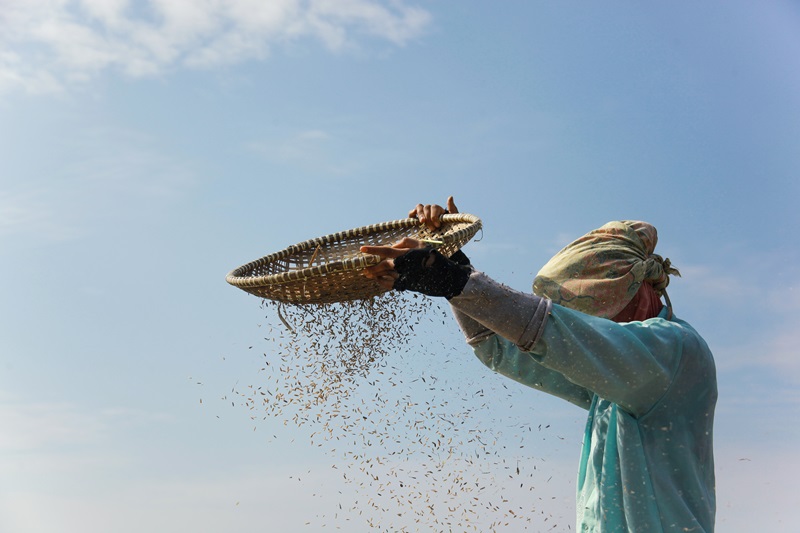
Photograph of a person wearing a headscarf and long-sleeve shirt, using a woven basket to sift grains against a blue sky. The grains are falling through the basket, illustrating a traditional agricultural or harvesting process. 

Classroom Activities Guide 

Classroom Activities Guide - accessible version 


Example teaching sequence

This teaching sequence supports Year 7 teachers to deliver the traditional separation techniques topic aligned to the NSW syllabus and the Australian Curriculum. Use this as a guide when planning lessons and structuring learning across the unit.
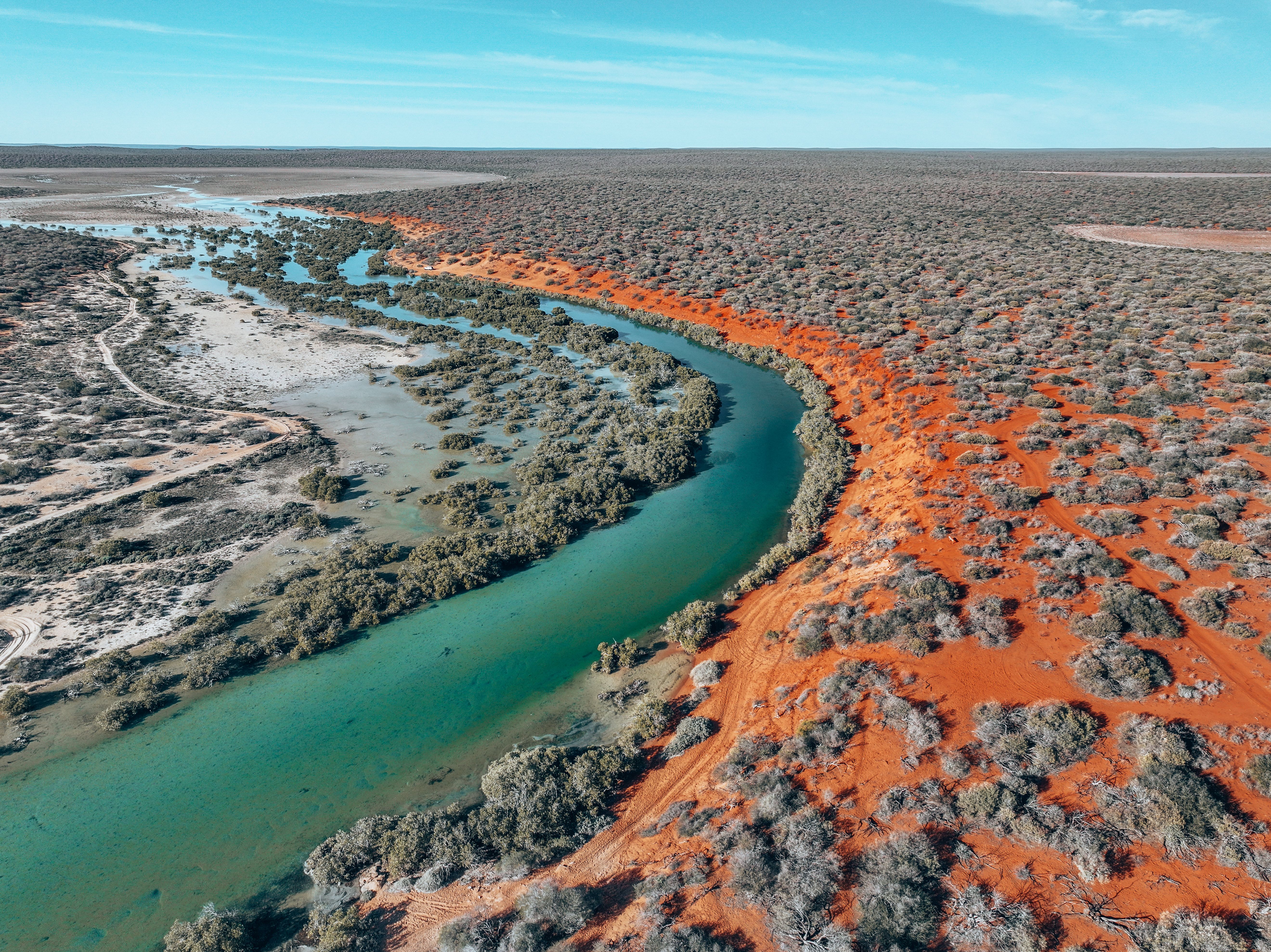
A photograph of a winding river flowing through a contrasting landscape with vibrant red soil on one side and sparse vegetation on the other. 

AC Example Teaching Sequence 

AC Example Teaching Sequence - accessible version 

NSW Example Teaching Sequence 

NSW Example Teaching Sequence - accessible version 


Experiment resources

To prepare for the traditional separation techniques experiments, teachers should read the Teacher Experiment and Procedures Guide, which provides step-by-step instructions for conducting the experiments. The Equipment List and Hazard Management Guide outlines the materials required and key safety considerations. Teachers should use this resource during planning and before any practical activities.

Begin the lesson with the Traditional separation techniques Experiment PowerPoint, which guides students through the experimenting process and provides visual support for the experiments. Students use the Student Experiment Procedure and Planners, which detail the step-by-step procedures and provide space for recording observations, analysis, and reflections. These should be used during the practical activities alongside the PowerPoint to support student learning.

Click the button below to download the Traditional Separation Techniques Experiment Resources zip file, containing 3 different experiment resource files.

Photograph showing a person using a traditional stone grinder to crush green herbs on a dirt ground. Surrounding the grinder are rustic clay pots, highlighting a cultural or historical food preparation method. 

Experiment Resources 

Experiment Resources- accessible version 


About

Aboriginal and/or Torres Strait Islander Peoples have used traditional separation techniques for thousands of years to separate and isolate desired materials. Year 7 students are invited to explore physical properties of matter, including particle size, mass, density, and solubility and how these influence the selection of appropriate separation techniques for wet and dry mixtures, including solutions, suspensions, and colloids.

Through teacher-led lessons, classroom activities, and experiments, students will explore techniques such as yandying, winnowing, filtration, cold pressing and heat-based oil extraction, analysing how these processes demonstrate an understanding that different mixtures require different methods to obtain a pure substance. Students will also make connections between these traditional techniques and scientific concepts, including the states of matter.

All educational materials are linked to the NSW syllabus and Australian curriculum.

Cultural Sensitivity: Aboriginal and Torres Strait Islander people should be aware that this module may contain images, voices and names of deceased persons. In some Aboriginal and Torres Strait Islander communities, hearing recordings, seeing images or the names of deceased persons may cause sadness or distress and in some cases, offend against strongly held cultural prohibitions.

Before you start

Respecting Indigenous Cultural and Intellectual Property

Please note that Indigenous Cultural and Intellectual Property (ICIP) is embedded within these Indigenous Science, Technology, Engineering and Mathematics (‘STEM’) Education Resources (the ‘Resources’). ICIP includes the knowledge and cultural heritage of Indigenous people, such as artwork, music, stories, language, and cultural objects and practices. For further information about how CSIRO protects ICIP, see Indigenous Cultural and Intellectual Property Principles - CSIRO.

Use of ICIP for educational outreach only

These Resources are for high school educators or secondary school students to support Indigenous STEM. These Resources have been published with the permission of the ICIP owners and with certain conditions on their use. This is to assert the ownership, authority and control of the ICIP owners over their ICIP and associated rights as embedded in the United Nations Declaration on the Rights of Indigenous Peoples (UNDRIP) – Article 31

Cultural Considerations

An eLearning course designed to guide educators and STEM professionals in building inclusive learning environments through cultural awareness and community engagement.

Cultural Considerations eLearn Module 


1
00:00:13,040 --> 00:00:15,800
I grew up inside the Pilliga scrub

2
00:00:15,800 --> 00:00:19,680
and we'd chase brumbies, wild
horses, through the scrub,

3
00:00:19,680 --> 00:00:22,720
and when we got scratches and whatever,

4
00:00:22,720 --> 00:00:25,000
a lot of the old guys had

5
00:00:25,000 --> 00:00:28,360
tell us young fellas out to fix 'em

6
00:00:28,360 --> 00:00:30,840
with different medicinal plants.

7
00:00:30,840 --> 00:00:32,680
Pine was one of them.

8
00:00:33,760 --> 00:00:38,200
It's so important that we look back
to our traditional ways of living

9
00:00:38,200 --> 00:00:41,640
and bringing it to today's
world, for me personally.

10
00:00:41,640 --> 00:00:42,880
Because I think there's so much

11
00:00:42,880 --> 00:00:45,840
that we all can learn from
65,000 years of history.

12
00:00:47,520 --> 00:00:51,440
White cypress in New South Wales
has become an invasive species,

13
00:00:51,440 --> 00:00:54,360
and that's because over
the last 260-odd years,

14
00:00:54,360 --> 00:00:56,040
we haven't managed it very well.

15
00:00:56,040 --> 00:00:58,080
They grow very close together,

16
00:00:58,080 --> 00:01:00,000
so that blocks the sunlight.

17
00:01:00,000 --> 00:01:02,840
No sun means the whole
ecosystem breaks down.

18
00:01:03,680 --> 00:01:04,600
I'm Cherie Thompson.

19
00:01:04,600 --> 00:01:07,560
I am a Wailwan woman from
Central West New South Wales,

20
00:01:07,560 --> 00:01:10,200
and I am the co-founder of Native Secrets.

21
00:01:10,200 --> 00:01:12,600
I'm Phil Thompson. I'm
a Bidjara Kara-Kara man.

22
00:01:12,600 --> 00:01:14,280
I'm from Central Queensland.

23
00:01:14,280 --> 00:01:16,080
What's unique about us at Native Secrets,

24
00:01:16,080 --> 00:01:17,960
we're using traditional land management

25
00:01:17,960 --> 00:01:19,440
to build a skincare brand

26
00:01:19,440 --> 00:01:21,840
that's going to be
recognised internationally.

27
00:01:21,840 --> 00:01:23,440
Cypress pine is quite unique.

28
00:01:23,440 --> 00:01:25,440
It has two essential oils.

29
00:01:25,440 --> 00:01:28,800
There's one in the leaf
and one in the wood.

30
00:01:28,800 --> 00:01:32,400
Traditionally, you just
pick it off the cypress pine

31
00:01:32,400 --> 00:01:35,360
leaves and small branches,

32
00:01:35,360 --> 00:01:37,960
we heat it up on hot rock

33
00:01:37,960 --> 00:01:42,960
and we'd put that heated plant branch

34
00:01:43,120 --> 00:01:46,840
on our wounds and wrap it in possum skin

35
00:01:46,840 --> 00:01:48,480
or kangaroo skin.

36
00:01:49,880 --> 00:01:51,840
Now we know through modern research

37
00:01:51,840 --> 00:01:54,320
that it's full of natural
anti-inflammatory,

38
00:01:54,320 --> 00:01:56,280
so that's why our people
used it when, you know,

39
00:01:56,280 --> 00:01:57,960
that's the sort of stuff
that fascinates us,

40
00:01:57,960 --> 00:02:01,440
that our old people worked
out over thousands of years

41
00:02:01,440 --> 00:02:03,880
all these things that were great for us.

42
00:02:03,880 --> 00:02:06,840
Cypress pine traditionally
was collected very simply.

43
00:02:06,840 --> 00:02:10,280
We would've pulled the leaf
off the trees or the branches.

44
00:02:10,280 --> 00:02:14,440
Today the white cypress is
collected slightly different

45
00:02:14,440 --> 00:02:15,800
than what we used to.

46
00:02:15,800 --> 00:02:18,320
Phil actually goes in with some machines

47
00:02:18,320 --> 00:02:20,560
that have little ground disturbance,

48
00:02:20,560 --> 00:02:23,960
but we still do separate the
leaf from the wood by hand.

49
00:02:24,840 --> 00:02:27,600
We extract the oils
using steam distillation,

50
00:02:27,600 --> 00:02:29,400
very similar to what we did traditionally.

51
00:02:29,400 --> 00:02:32,200
We've just got new
technology to do it, (right?)

52
00:02:32,200 --> 00:02:35,160
Together, the wood oils and the leaf oil,

53
00:02:35,160 --> 00:02:37,120
we can combine them back
into our skincare range.

54
00:02:37,120 --> 00:02:39,320
It makes a fantastic product.

55
00:02:39,320 --> 00:02:41,880
(music)

56
00:02:41,880 --> 00:02:44,720
It's really important
for me, in particular,

57
00:02:44,720 --> 00:02:46,680
that we share our stories

58
00:02:46,680 --> 00:02:49,080
and our Traditional
Knowledge with the world,

59
00:02:49,080 --> 00:02:50,680
and the way that we've chosen

60
00:02:50,680 --> 00:02:52,480
to do that is through skincare.

61
00:02:53,720 --> 00:02:56,240
CSIRO has been collaborating
with Native Secrets now

62
00:02:56,240 --> 00:02:57,400
on a couple of projects.

63
00:02:57,400 --> 00:02:59,280
One of those projects
we have looked at some

64
00:02:59,280 --> 00:03:02,120
of the existing research that
is out there on white cypress

65
00:03:02,120 --> 00:03:03,840
and looking at the traditional uses

66
00:03:03,840 --> 00:03:06,000
and then also what's known about things,

67
00:03:06,000 --> 00:03:09,520
like anti-inflammatory activity,
antimicrobial, pain relief,

68
00:03:09,520 --> 00:03:10,960
and that research is very much led

69
00:03:10,960 --> 00:03:12,440
by that Traditional Knowledge

70
00:03:12,440 --> 00:03:15,600
and how they would use them
in their skincare range.

71
00:03:15,600 --> 00:03:19,040
Traditionally, we didn't
waste any part of the animal.

72
00:03:19,040 --> 00:03:20,640
We used all parts of the tree.

73
00:03:20,640 --> 00:03:23,640
So that's the approach we
take to how we do business.

74
00:03:23,640 --> 00:03:24,480
at Native Secrets.

75
00:03:24,480 --> 00:03:26,160
We use all parts of the tree,

76
00:03:26,160 --> 00:03:29,560
and even the end product,
which is a bioresource.

77
00:03:29,560 --> 00:03:32,120
We are now turning that into a biochar,

78
00:03:32,120 --> 00:03:33,880
it's a natural fertiliser,

79
00:03:33,880 --> 00:03:35,880
and it completes our circular economy.

80
00:03:35,880 --> 00:03:38,880
(music)

81
00:03:38,880 --> 00:03:42,680
So at Native Secrets,
we have found that white cypress,

82
00:03:42,680 --> 00:03:46,400
yes, it's a problem, but it's
also part of the solution,

83
00:03:46,400 --> 00:03:51,320
and using Traditional Knowledge
and modern science to create a product

84
00:03:51,320 --> 00:03:53,520
that people can use every day.

85
00:03:53,520 --> 00:03:54,360
At Native Secrets,

86
00:03:54,360 --> 00:03:56,360
the model we've created can be picked up

87
00:03:56,360 --> 00:03:59,320
and put in any community around Australia,

88
00:03:59,320 --> 00:04:01,200
because what we've
found is every community

89
00:04:01,200 --> 00:04:05,240
has a unique medicinal
plant or bush tucker,

90
00:04:05,240 --> 00:04:06,960
where we can do something very similar

91
00:04:06,960 --> 00:04:08,520
to what we've done at Native Secrets

92
00:04:08,520 --> 00:04:10,400
and tell that story around the world.

93
00:04:11,520 --> 00:04:15,880
Once we thin out cypress pine
and the sun penetrates the ground again,

94
00:04:15,880 --> 00:04:19,000
the ecosystem comes back,
so the grass comes back.

95
00:04:19,000 --> 00:04:20,520
Grass means grass seed.

96
00:04:20,520 --> 00:04:24,240
Grass seed means ants, bugs,
beetles, birds, echidnas

97
00:04:24,240 --> 00:04:26,280
can all come back to this ecosystem.

98
00:04:26,280 --> 00:04:28,160
(music)


Curriculum links

Australian Curriculum and syllabus connections

View how the traditional separation techniques resources can be linked to certain learning areas within the NSW syllabus and Australian Curriculum.

Australian Curriculum and Syllabus Links  PDF (245 KB)

Australian Curriculum and Syllabus Links - accessible version  TXT (3 KB)

Student and teacher resources

Context PowerPoint

This presentation provides background context for the traditional separation techniques topic including an introduction to pure substances and mixtures. Use it at the beginning of the unit sequence to build a foundational understanding of key concepts.

 
Photograph showing a close-up of dark-skinned hands cupped together holding several small, bright red seeds.

Context PowerPoint  PPTX (97 MB)


Classroom activities guide

This guide outlines a range of classroom activities to support students’ understanding of pure substances and mixtures. Use it to plan lessons to reinforce key ideas through discussion and hands-on learning.

 
Photograph of a person wearing a headscarf and long-sleeve shirt, using a woven basket to sift grains against a blue sky. The grains are falling through the basket, illustrating a traditional agricultural or harvesting process.

Classroom Activities Guide  PDF (2 MB)

Classroom Activities Guide - accessible version  TXT (25 KB)


Example teaching sequence

This teaching sequence supports Year 7 teachers to deliver the traditional separation techniques topic aligned to the NSW syllabus and the Australian Curriculum. Use this as a guide when planning lessons and structuring learning across the unit.

 
A photograph of a winding river flowing through a contrasting landscape with vibrant red soil on one side and sparse vegetation on the other.

AC Example Teaching Sequence  PDF (477 KB)

AC Example Teaching Sequence - accessible version  TXT (16 KB)

NSW Example Teaching Sequence  PDF (477 KB)

NSW Example Teaching Sequence - accessible version  TXT (16 KB)


Experiment resources

To prepare for the traditional separation techniques experiments, teachers should read the Teacher Experiment and Procedures Guide, which provides step-by-step instructions for conducting the experiments. The Equipment List and Hazard Management Guide outlines the materials required and key safety considerations. Teachers should use this resource during planning and before any practical activities.

Begin the lesson with the Traditional separation techniques Experiment PowerPoint, which guides students through the experimenting process and provides visual support for the experiments. Students use the Student Experiment Procedure and Planners, which detail the step-by-step procedures and provide space for recording observations, analysis, and reflections. These should be used during the practical activities alongside the PowerPoint to support student learning.

Click the button below to download the Traditional Separation Techniques Experiment Resources zip file, containing 3 different experiment resource files.
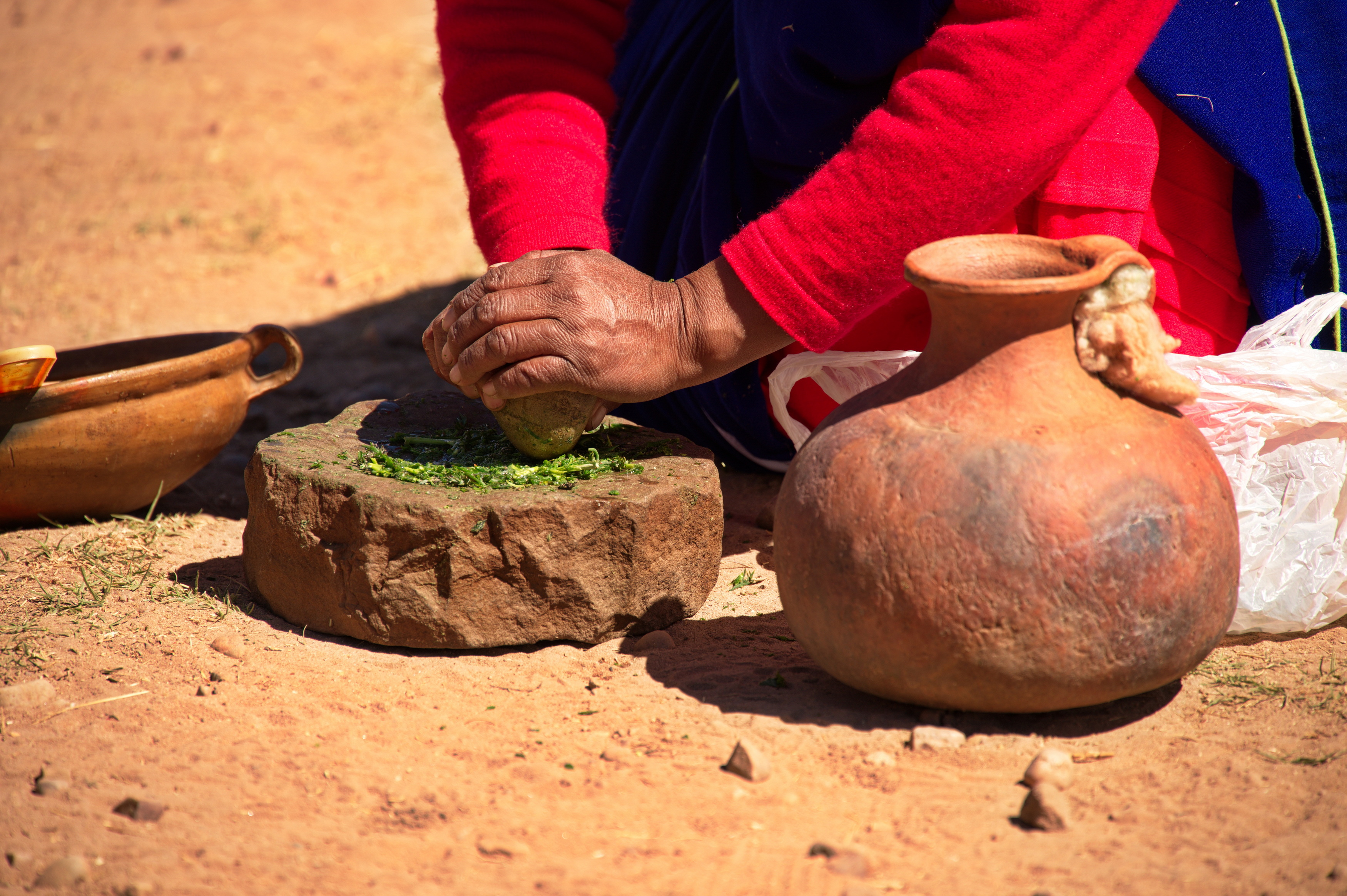
 
Photograph showing a person using a traditional stone grinder to crush green herbs on a dirt ground. Surrounding the grinder are rustic clay pots, highlighting a cultural or historical food preparation method.

Experiment Resources  ZIP (66 MB)

Experiment Resources- accessible version  ZIP (61 MB)


We value your feedback

0 = not at all likely to 10 = extremely likely.