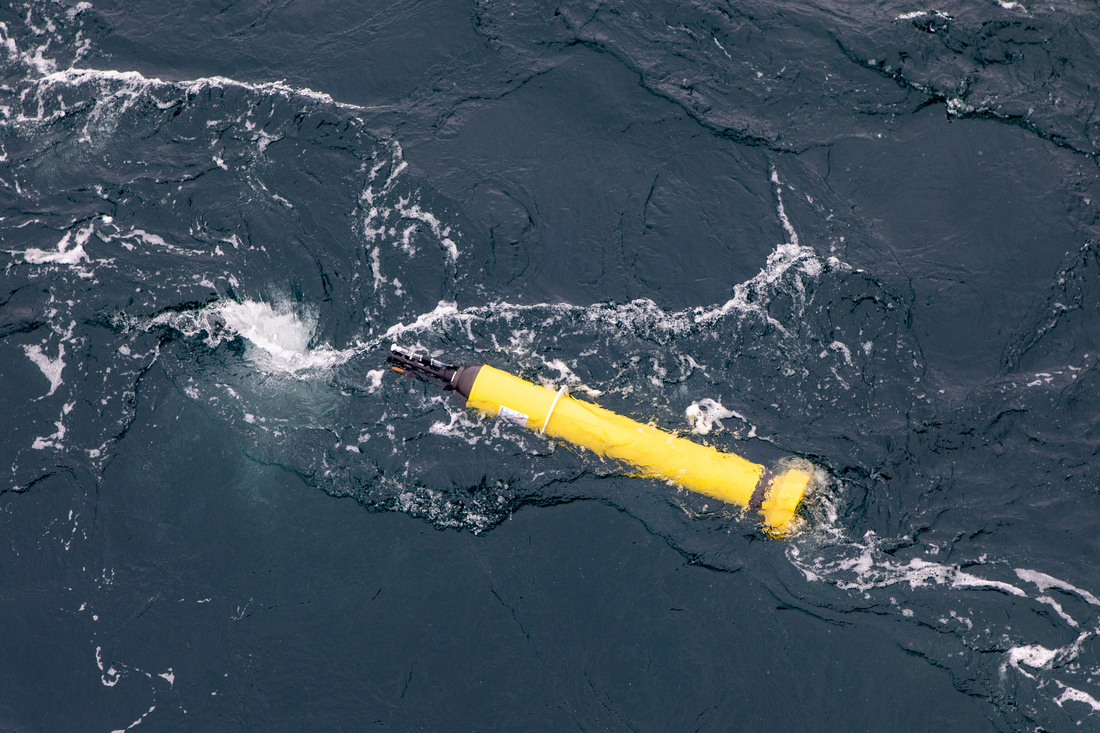
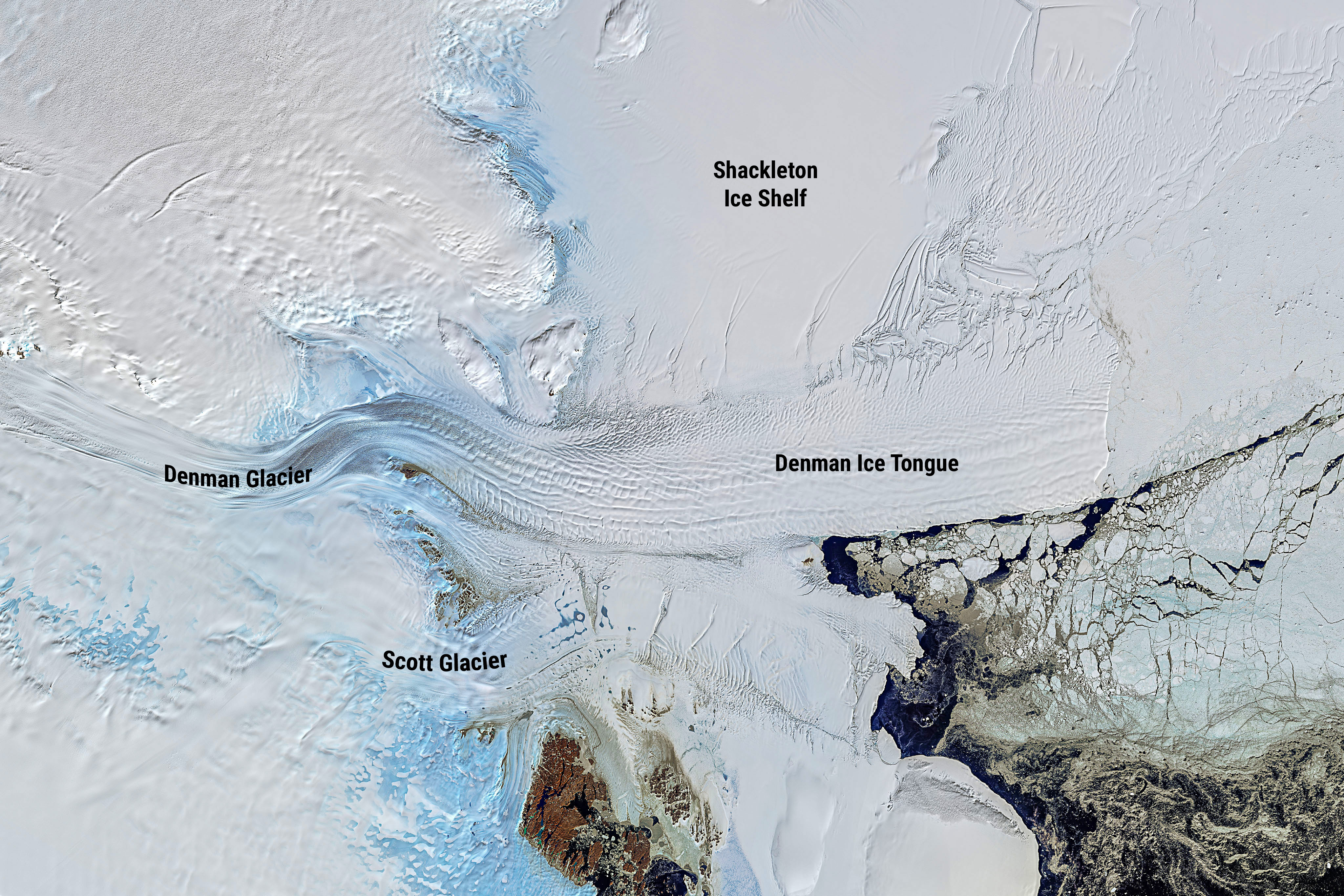
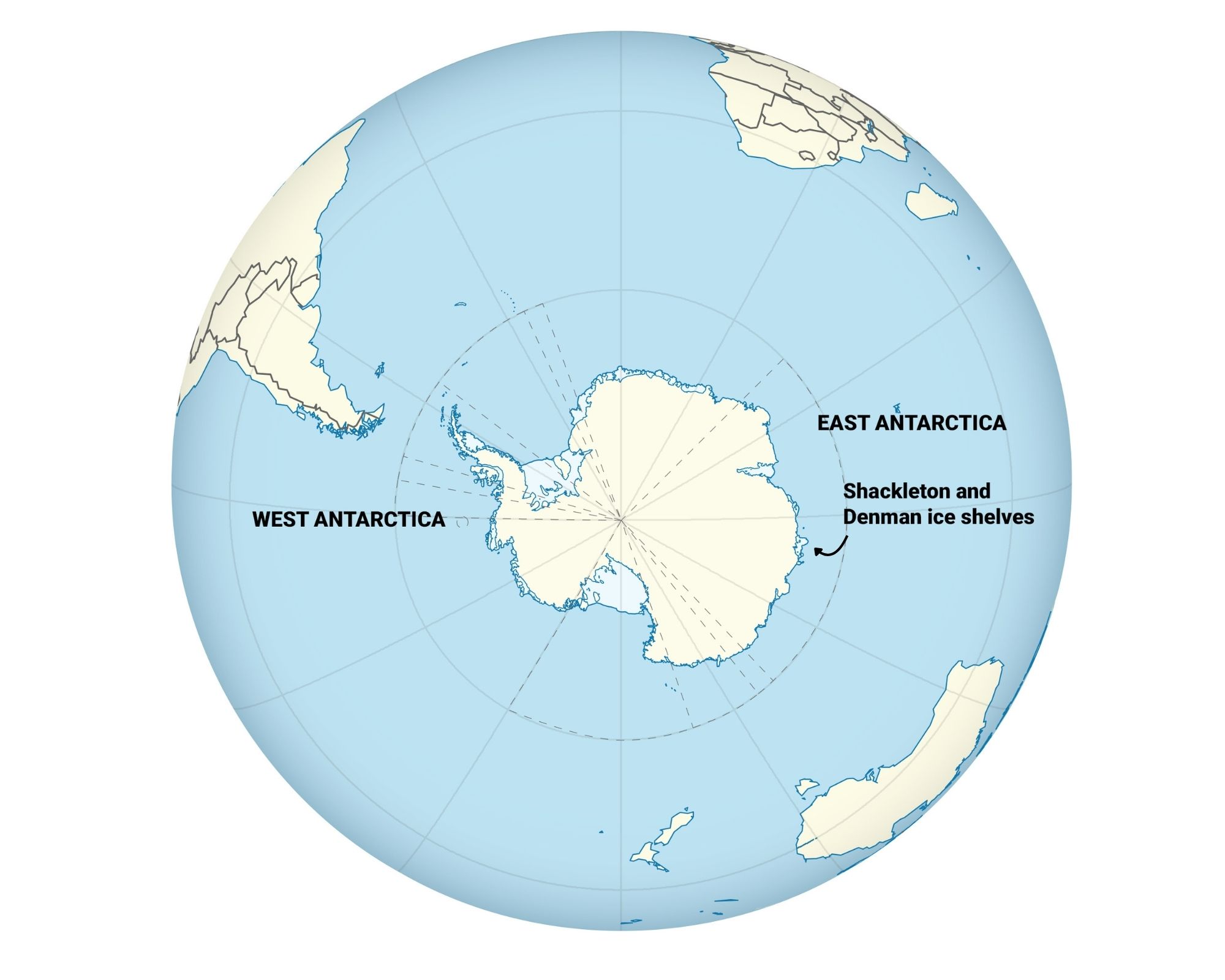
A robotic float has measured the temperature and salinity from parts of the ocean never sampled before — underneath massive floating ice shelves in East Antarctica.
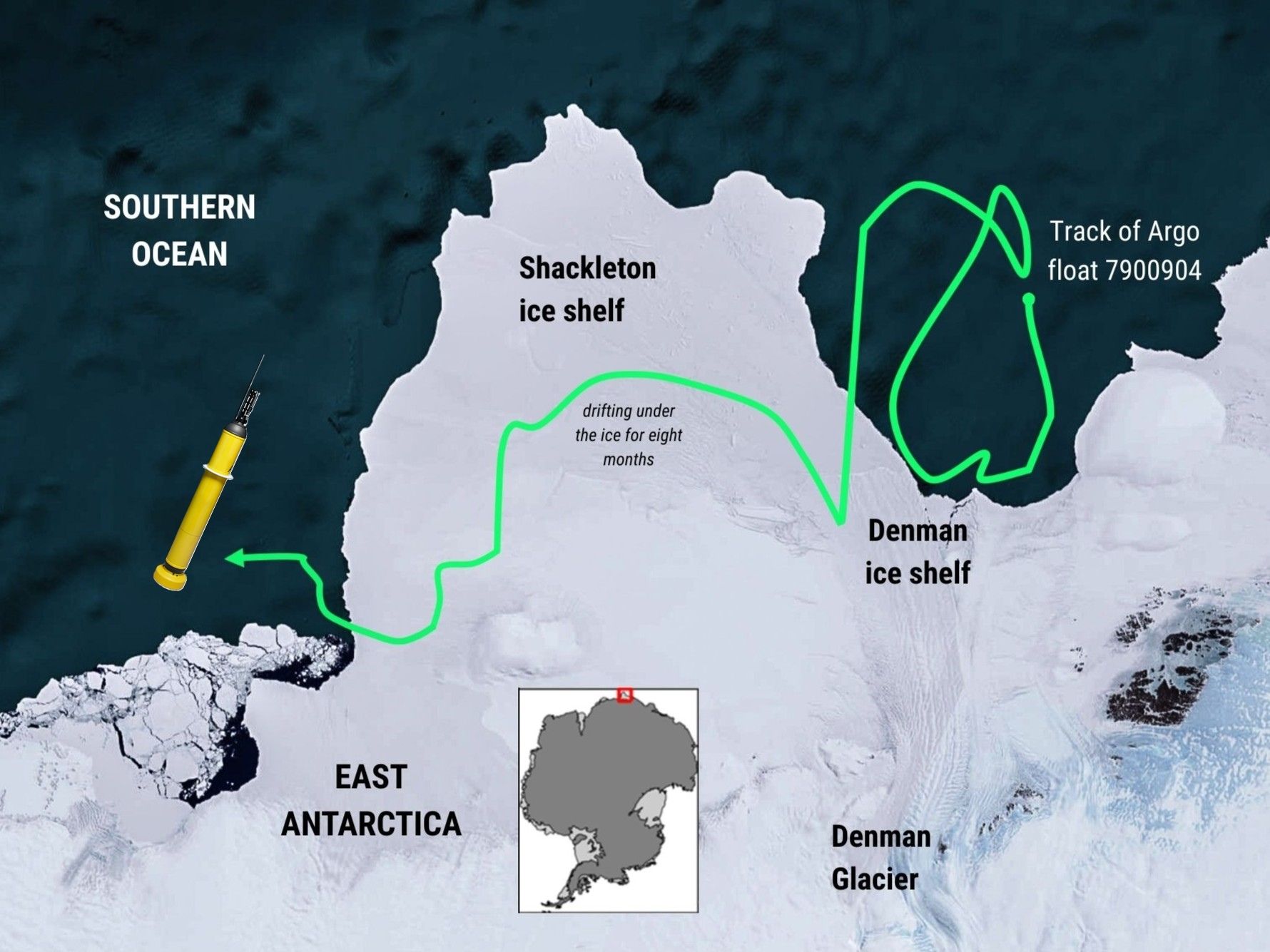
For two-and-a-half years, an Argo float equipped with oceanographic sensors collected nearly 200 profiles of the ocean on a 300-kilometre journey spanning the Denman and Shackleton ice shelves.
During that time, it disappeared under the ice and survived to send back the first-ever ocean transect beneath an East Antarctic ice shelf.
“We got lucky,” said oceanographer Dr Steve Rintoul from CSIRO, Australia’s national science agency, partner with the Australian Antarctic Program Partnership at the University of Tasmania.
“Our intrepid float drifted beneath the ice and spent eight months under the Denman and Shackleton ice shelves, collecting profiles from the seafloor to the base of the ice every five days.
“These unprecedented observations provide new insights into the vulnerability of the ice shelves.”
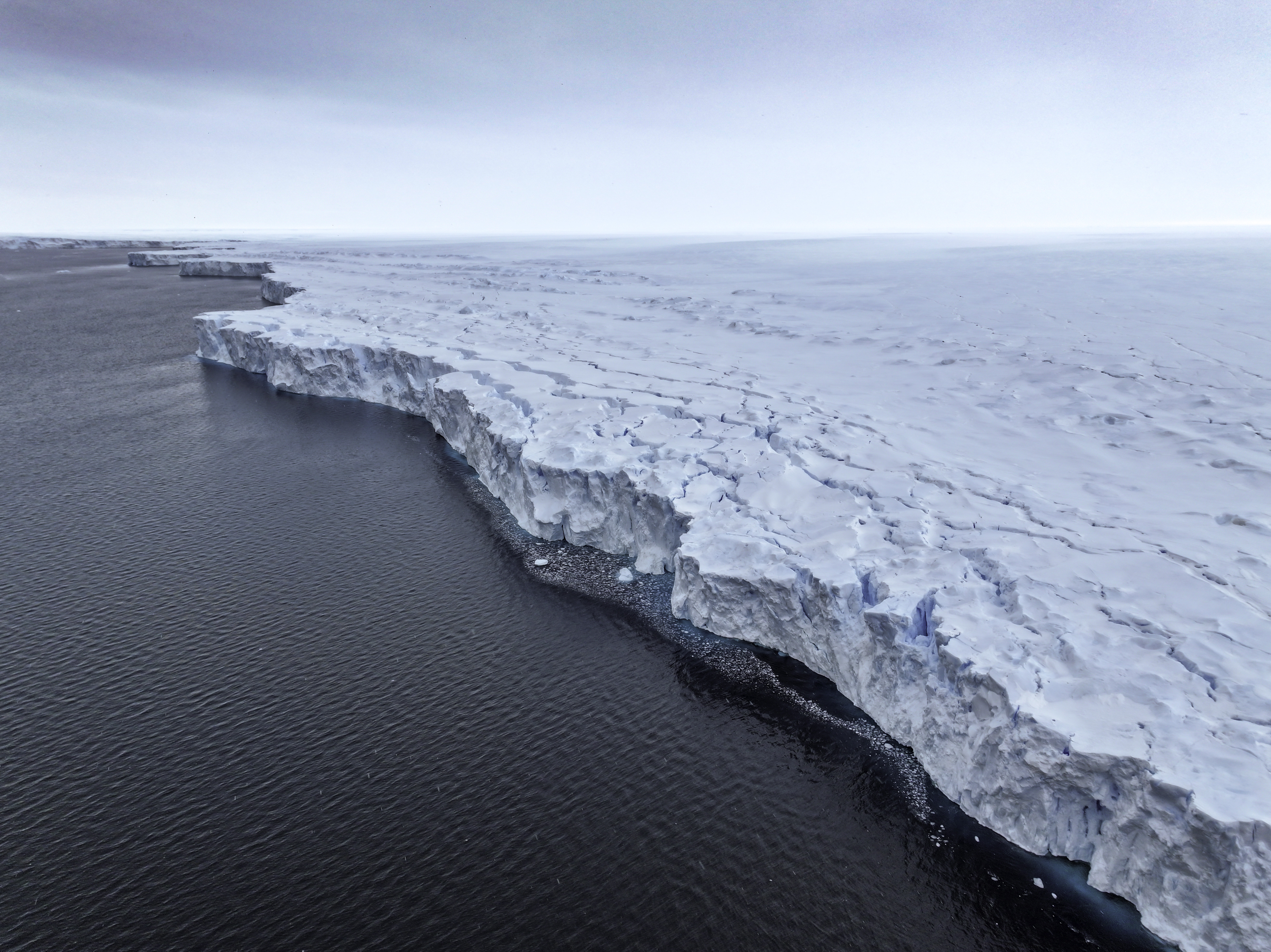
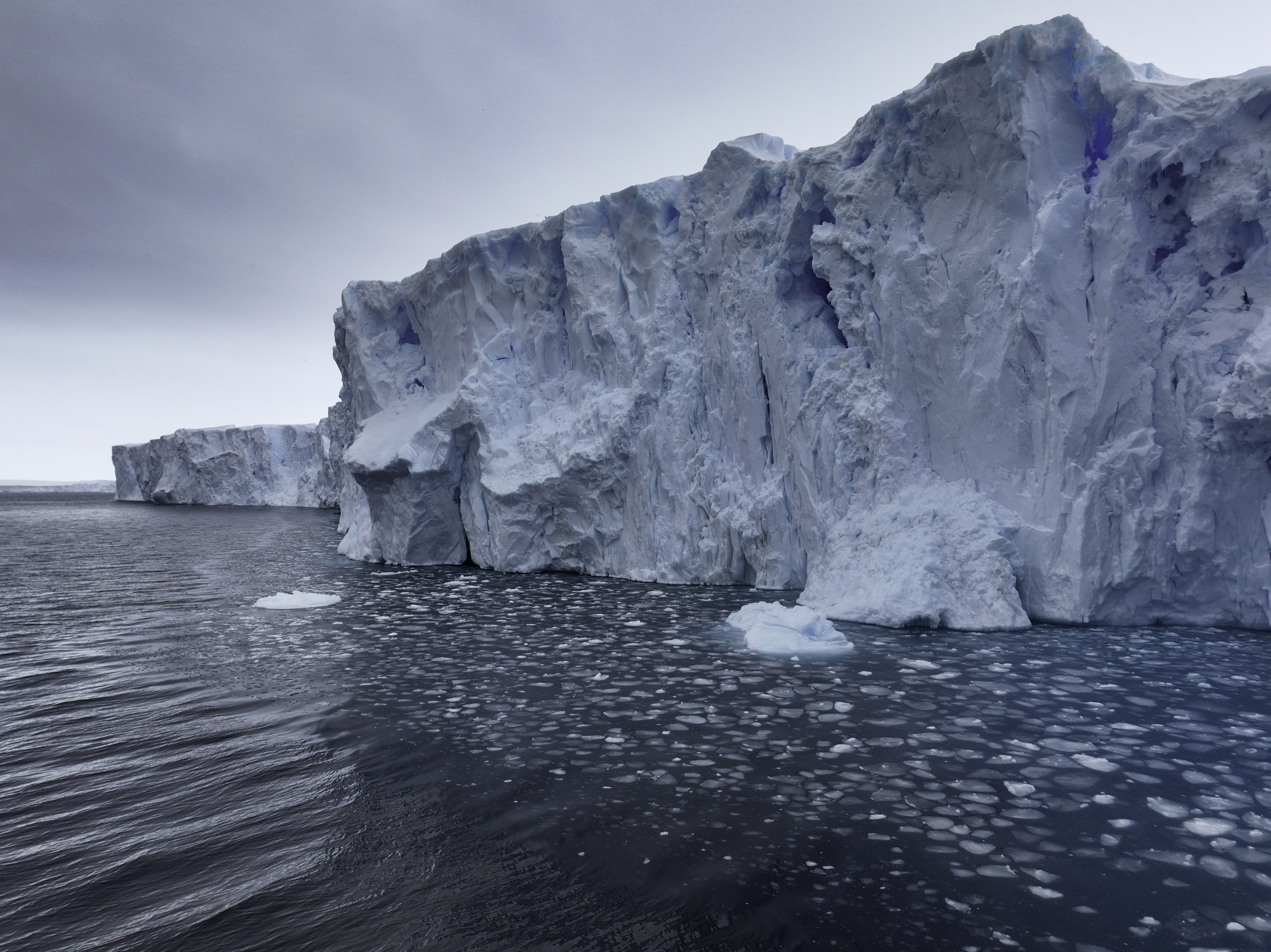
The measurements reveal the Shackleton ice shelf (the most northerly in East Antarctica) is, for now, not exposed to warm water capable of melting it from below, and therefore less vulnerable.
However, the Denman Glacier, with its potential 1.5-metre contribution to global sea level rise, is delicately poised: warm water is reaching underneath and small changes in the thickness of the warm water layer could drive much higher melt rates that lead to unstable retreat.
The transfer of heat from the ocean to the ice depends on the ocean conditions in the 10-metre thick ‘boundary layer’ immediately below the ice shelf.
“A great advantage of floats is that they can measure the properties of the boundary layer that control the melt rate,” said Dr Rintoul.
“The float measurements will be used to improve how these processes are represented in computer models, reducing the uncertainty in projections of future sea level rise.
“Deploying more floats along the Antarctic continental shelf would transform our understanding of the vulnerability of ice shelves to changes in the ocean.
"This, in turn, would help reduce the largest uncertainty in estimates of future sea level rise,” he said.
Leader of the Australian Antarctic Program Partnership, Prof Delphine Lannuzel, sampled the ocean near the ice shelves during the Denman Marine Voyage earlier this year.
“Against the enormity of such a wild region, this is an amazing story of the little float that could,” she said.
“Under incredibly testing conditions, a relatively tiny instrument has delivered us a wealth of invaluable information.”
Published in Science Advances: Rintoul S.R., van Wijk E.M., Herraiz-Borreguero, L. and Rosevear, M.G. (2025) 'Circulation and ocean–ice shelf interaction beneath the Denman and Shackleton Ice Shelves', Sci. Adv. 11, 10.1126/sciadv.adx1024
The authors are from CSIRO, the Australian Antarctic Program Partnership and the Institute for Marine and Antarctic Studies at the University of Tasmania. They acknowledge support from Australia’s Integrated Marine Observing System (IMOS) — IMOS is enabled by the National Collaborative Research Infrastructure Strategy (NCRIS).
BACKGROUND INFORMATION
Sea level rise poses a threat to hundreds of millions of people living on the coast, including low-lying islands, deltas and coastal cities. How much Antarctica will contribute to sea level rise is the largest uncertainty in future projections.
Part of the Antarctic Ice Sheet rests on bedrock below present-day sea level and is potentially vulnerable to changes in the surrounding ocean. Most of the vulnerable ice is in East Antarctica, which was thought to be isolated from warm water and therefore unlikely to melt. But new observations show that large volumes of ice in East Antarctica are potentially at risk.
The stability of the Antarctic Ice Sheet depends on the floating ice shelves around the edge of Antarctica. As glaciers flow from the Antarctic continent to the sea, they start to float, forming ice shelves.
The ice shelves act like buttresses that resist the flow of ice from Antarctica to the ocean. If the ice shelves weaken or collapse, more ice flows off the continent and into the ocean, causing sea level to rise. The key factor determining the fate of the Antarctic ice sheet – and therefore the rate of sea level rise – is how much ocean heat reaches the base of the floating ice shelves.
However, the processes driving melt in ice shelf cavities are very challenging to observe. Ice shelves can be hundreds or thousands of metres thick. While it is possible to drill a hole through the ice and lower oceanographic sensors, this is expensive and rarely done, so very few measurements have been made in ice shelf cavities.
Floats that drift with ocean currents, periodically rising to the surface to collect a profile of temperature and salinity, provide an alternative.
“There was only one problem,” said Dr Rintoul.
“As the ice prevented the float from reaching the sea surface, it was unable to communicate with satellites and get a GPS fix to tell us where it is.”
“We had to do some detective work to determine where the float measurements were made. Each time the float bumped its head on the ice, it provided a measurement of the depth of the ice shelf base, or ice draft. We could compare the ice draft measured by the float to satellite measurements of draft to work out the path of the float beneath the ice,” he said.