Australians are ready to be part of conversations about complex science issues, according to a new CSIRO report, capturing community views from CSIRO’s first public dialogue on quantum technologies.
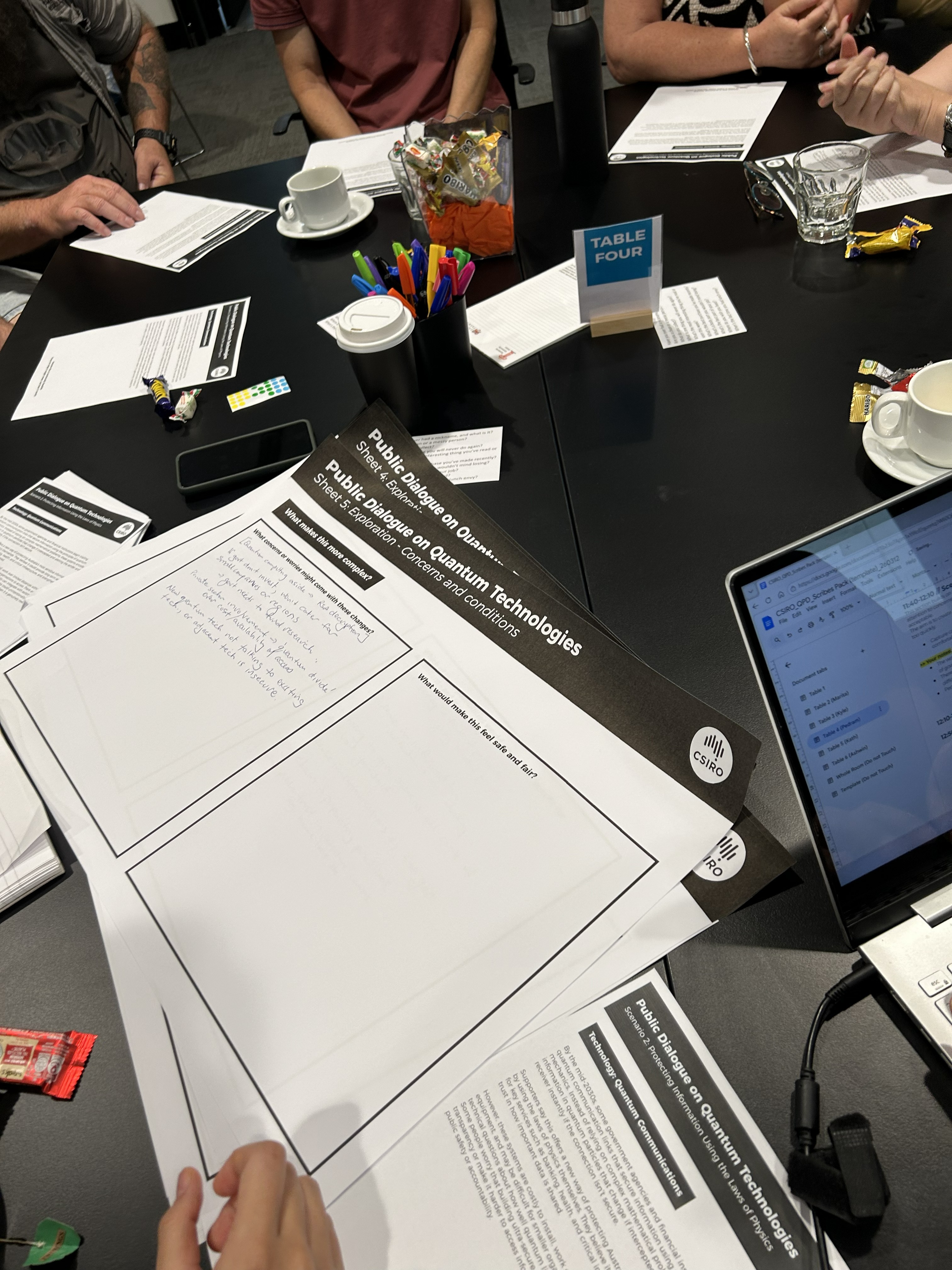
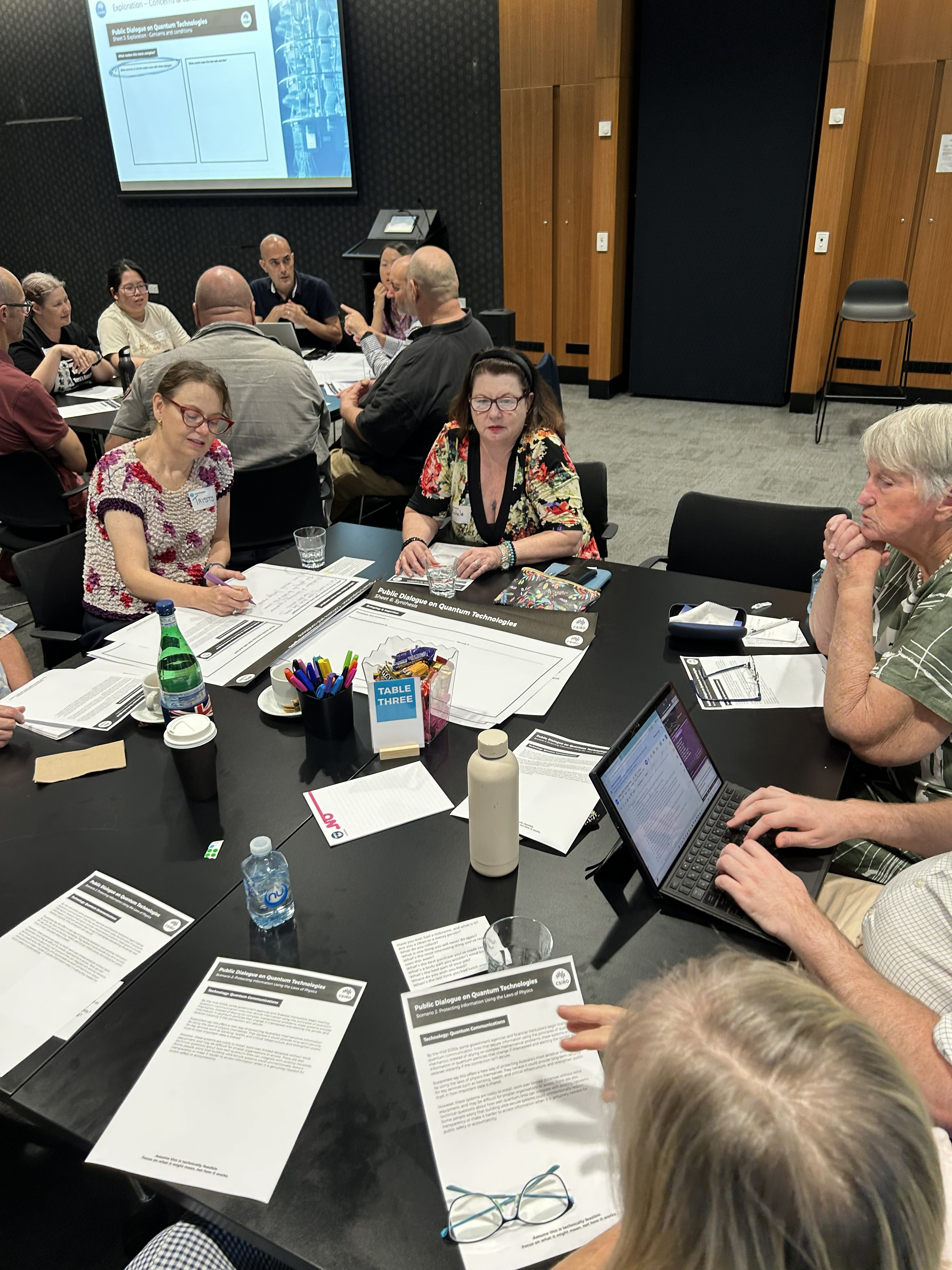
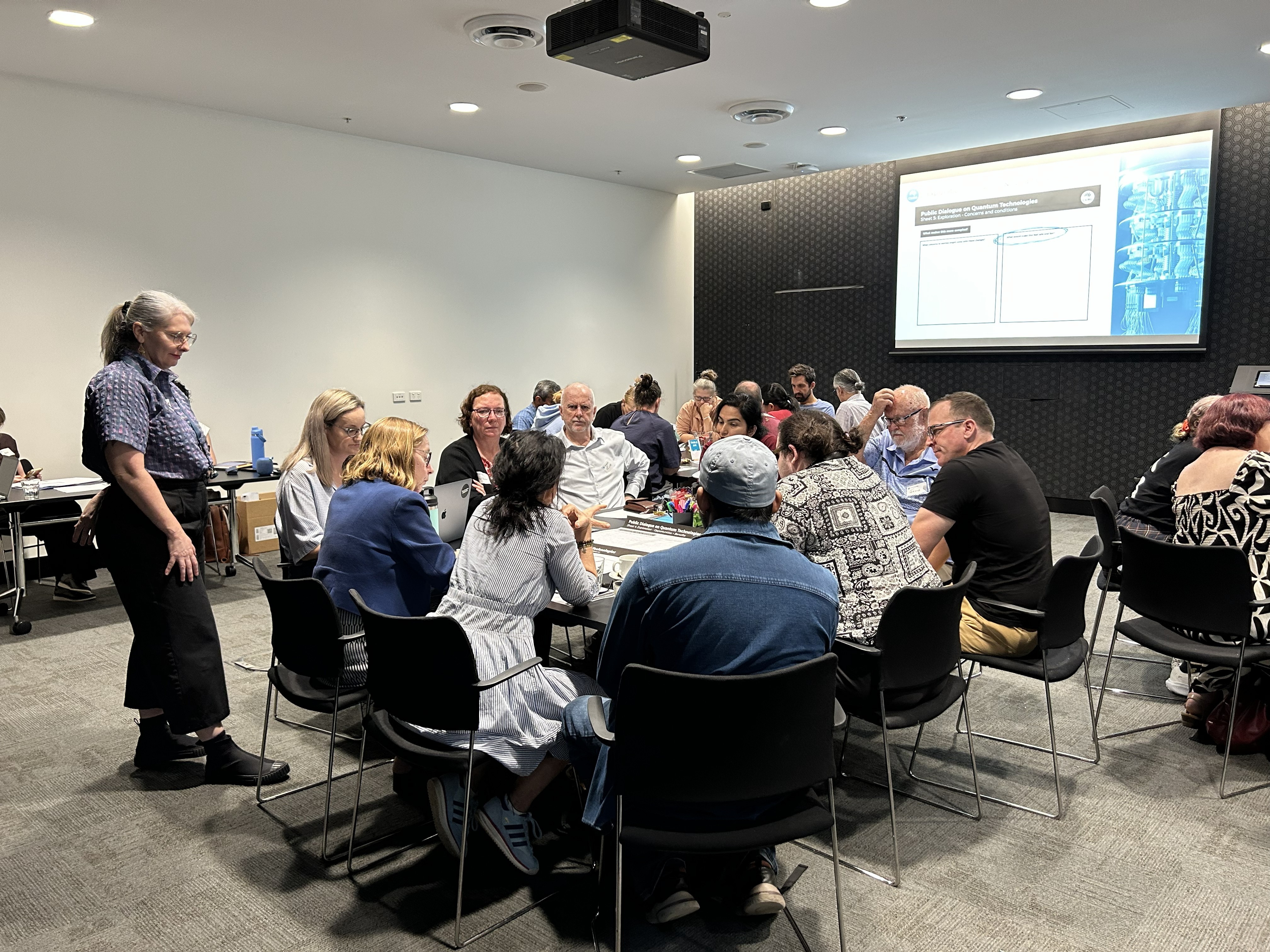
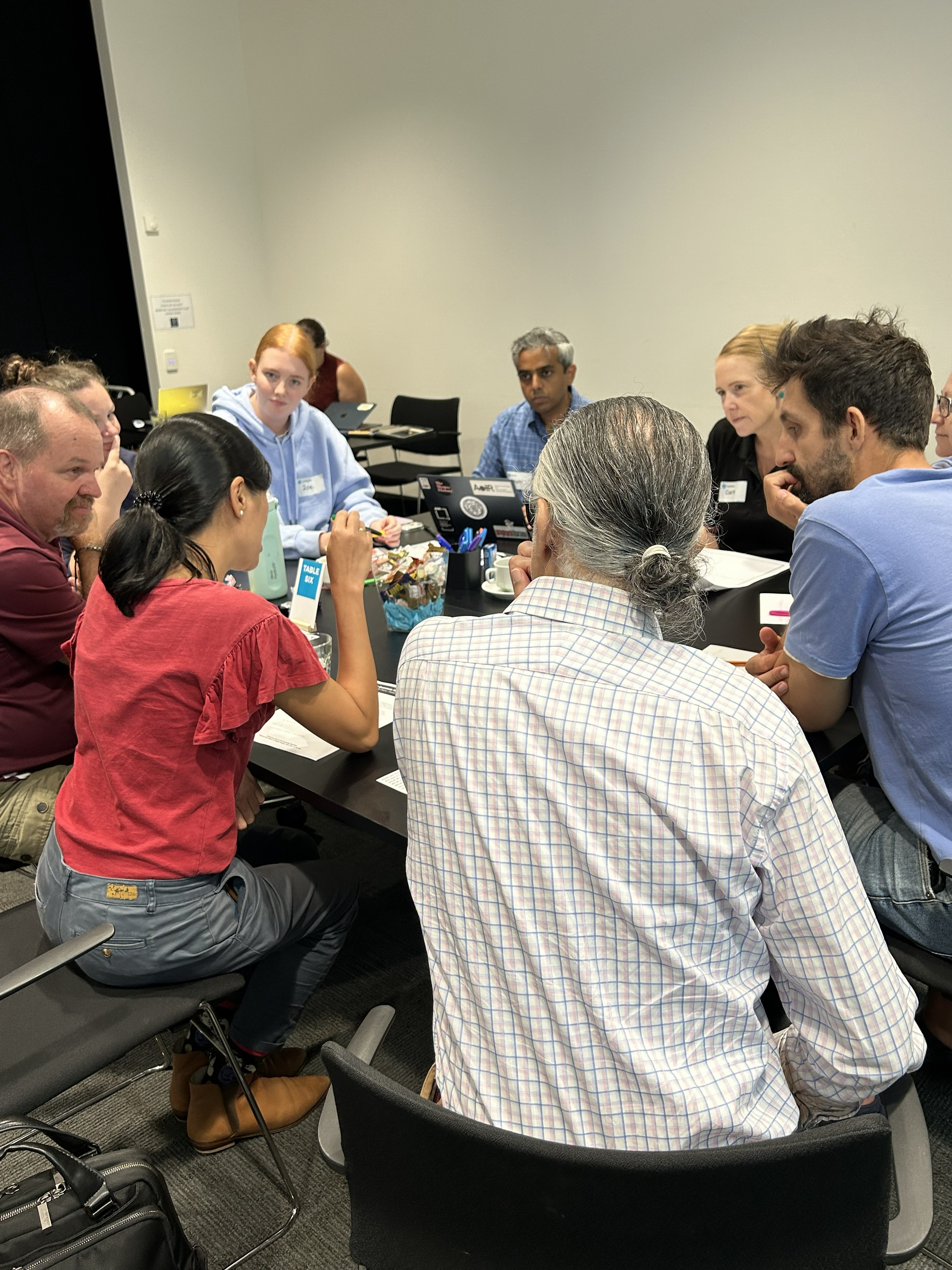
Delivered by CSIRO’s Science Connect, the pilot brought together 39 citizens and 18 quantum specialists to discuss how quantum technologies could affect healthcare, communications, supply chains and other parts of daily life.
Public dialogue, an approach widely used in the UK, Canada and across Europe to inform science and technology policy, brings members of the public together with experts to discuss complex issues and help shape future decisions. It helps organisations understand not just what people think, but why.
Quantum technologies are expected to create new opportunities in areas such as healthcare, secure communications and advanced computing over the next decade. As these technologies move from the lab towards real-world use, CSIRO wanted to better understand how Australians think about the techonologies’ benefits, risks and future development.
Citizen participants ranged from 18 to over 70 years of age, reflecting a diversity of backgrounds and lived experiences. Before the dialogue, 74 per cent reported limited familiarity with quantum technologies. Despite this, they quickly engaged in face-to-face discussions about privacy, trust, governance, fairness and public benefit of science.
Around 90 per cent of participants reported a better understanding of quantum after the session, while a similar number said they felt more confident discussing potential impacts on society.
The public dialogue found Australians’ support of quantum technologies depends on how the technologies are governed, who benefits and whether public interests are protected.
The findings come as international experts call for greater public participation in science and policy. A recent Nature commentary, Six ways to put the public at the heart of science and policy, argued that involving citizens early in decisions about science and technology can strengthen trust and improve decision making.
Tristy Falkenberg, Deputy Director, CSIRO’s Science Connect said: "The public dialogue model works because it tells us not just what people think, but why they think it. It helps us understand how trust is built, how people weigh trade-offs and what needs to be true for the public to support a new technology.”
"One of the most important findings was that people really don't need a physics degree to have meaningful conversations about complex emerging technologies. Most participants came into the room knowing very little about quantum. Yet they quickly engaged with questions around trust, governance, fairness and public benefit."
"We found Australians weren’t asking whether quantum technologies should exist. They're asking under what conditions should the technology be developed, governed and used."
"Internationally and nationally, there's growing recognition that public participation is becoming an essential part of responsible science and innovation. Our pilot showed Australians are ready and willing to engage with complex technologies when they're invited into the conversation."
What Australians told us about quantum
Participants explored future scenarios involving regional healthcare, protecting information and strengthening supply chains, all areas where quantum technologies could have significant impact in the future.
Healthcare generated some of the strongest discussion. Participants saw opportunities for earlier diagnosis, better access to care and improved health outcomes for regional and remote communities. They also raised questions about privacy, over-diagnosis and the use of sensitive health data.
Across all discussions, one message stood out: people were less concerned about whether quantum technologies would work and more interested in what would happen if they succeeded.
Participants wanted to know who would control the technology, how data would be protected and how benefits would be shared. They called for transparency, independent oversight and evidence that public investment delivers public value.
Many also stressed the benefits of quantum technologies should be shared across Australia, including regional and rural communities.
One participant reflected "I learned something new and felt I could contribute. These sorts of sessions are a fantastic start for public engagement."
The dialogue was designed as a two-way learning experience, providing valuable insights for researchers and specialists to help better understand community expectations and factors that shape trust in emerging technologies.
Sally Shrapnel, Associate Professor of Physics at The University of Queensland and Deputy Director of the ARC Centre of Excellence for Engineered Quantum Systems (EQUS), said: "For me, being involved in a conversation like this is really exciting. Much of my work in quantum science happens separately from the general public, so it's valuable to have the opportunity to speak directly with people who may ultimately be the end users of the technologies we're developing."
“Hearing their perspectives on what matters to them, as well as the risks and benefits they see, is incredibly important and has been one of the key takeaways."
Looking beyond quantum
While this pilot focused on quantum technologies, the lessons extend far beyond a single field. CSIRO is exploring how public dialogue can help governments, industry and research organisations make socially informed policy, research and investment decisions. Science and technology are more impactful when they reflect the values of the society they are meant to serve. The topics open to public dialogue are vast and could include: AI, climate adaption and answering questions such as: How do we live more sustainably? how do we deliver net zero?
Tristy Falkenberg said Australians want opportunities to be involved before major decisions are made.
"People value being asked for their views,” she said. “They want a voice in decisions that could affect their lives, communities and future."
"Public dialogue creates better conversations between communities, researchers, policymakers and industry. It can reveal insights traditional consultation often misses and help build trust along the way."
CSIRO is inviting expressions of interest from organisations interested in partnering on future public dialogues.
For more information or to discuss partnership opportunities, contact CSIRO Science Connect.