
Powder Lab's equipment that is unique in Australia
The Tekna Tek15 plasma spheroidisation equipment, with its external reactor, is the only machine of its type in Australia suited for developing powders from aluminium to tungsten. This equipment is available to industry for collaborative work.
And, with only a few operating in the world, the Nara Hybridisation Systems: NHS-0 and NHS-1, are the only machines of their kind in Australia, and are used for metal powder development work.

Tekna Tek15 Powder Spheroidization Plant
The Tek15 upgrades irregular, raw, or lower-grade metal and ceramic powders (and combinations) into uniform, spherical, and in some cases high-purity powders, increasing the commercial value of mining or intermediate products and improving resource efficiency. The system allows for the creation of custom alloyed powders tailored to specific industrial needs, supporting research and development efforts and fast-tracking material innovation for mining, energy, aerospace and defence applications.
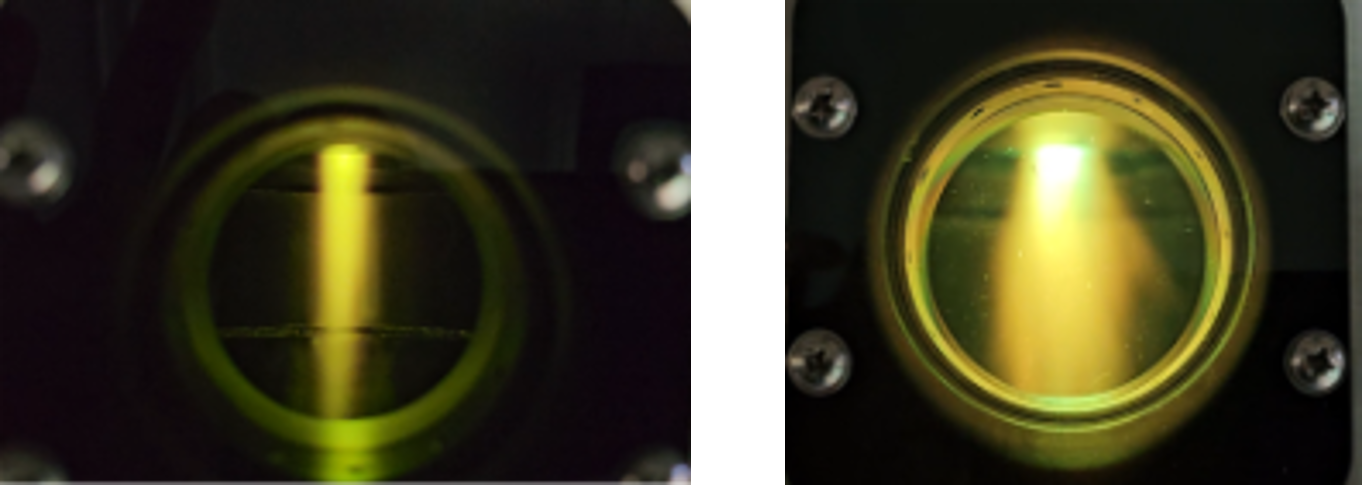
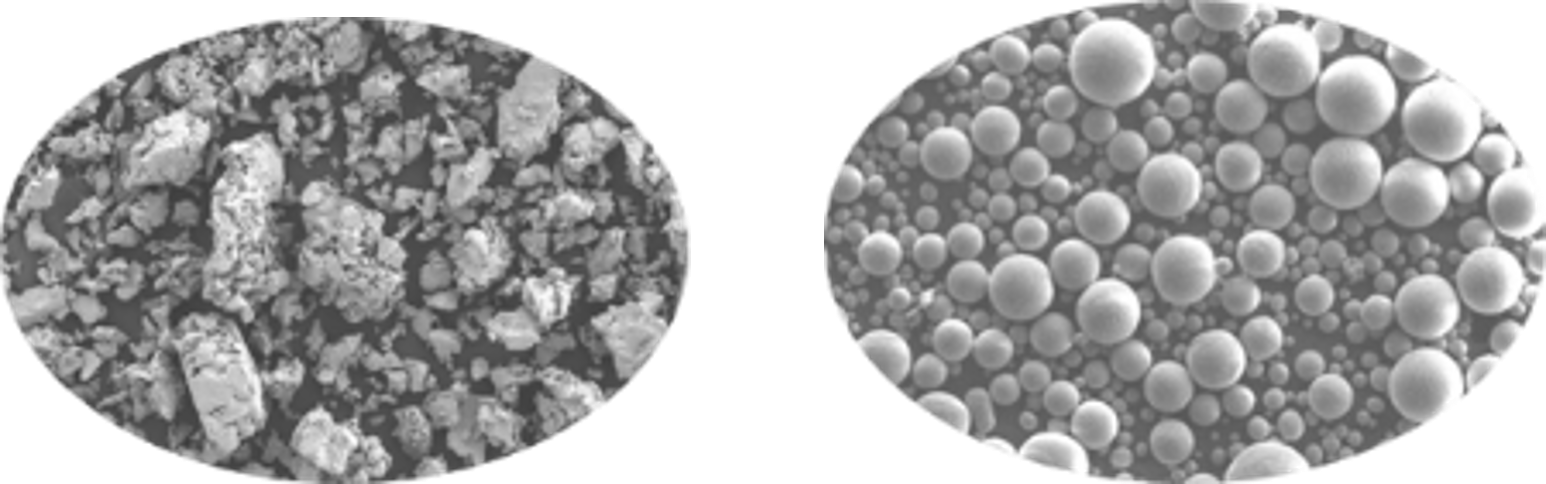
Tekna Tek15 Powder Spheroidisation Plant converts non-spherical powders - such as those produced through crushing or water atomisation - into spherical powders optimised for additive manufacturing.
Nara Hybridisation Systems
The Nara Hybridisation systems are solid state milling systems originally developed by the Nara Machinery Co. Ltd in Japan. They are suitable for energy materials, agriculture and pharmaceutical milling, which CSIRO has pioneered, for metal based additive manufacturing and feedstock development.
The process, sometimes referred to as mechanofusion, surface filming, embedding or dry powder coating, generates a shell and core structure in the powder particles. It is ideal for unique combinations of metals, metal-ceramics, metal-polymers, and other hybrid powders used for grain inoculation (doping), composite materials, magnetic material, high entropy alloys development, and more.
CSIRO has used this technology to enhance the compaction of preforms from waste materials for titanium wire production, sphering and doping of graphite for enhanced battery anode production, production of doped wire and doped powders.

PX100 MarkForged Binder Jet Printer
CSIRO’s Lab 22 hosts one of only four complete PX100 production lines in the world. The MarkForged [WC7.1]PX100, a binder jet additive manufacturing tool, takes the powders produced by the Tekna Tek15 and the NHS to produce small, geometrically intricate components to medium sized objects. This process involves depositing a layer of custom-made powder into the build chamber, after which a binder print head selectively applies a binder to form the geometry of the part being designed.
The initial component, known as the "green part," is subsequently transferred to a sintering furnace for final processing. This technology supports both metal and ceramic applications. For components and applications where sintering is an appropriate manufacturing method, binder jetting may serve as a cost-effective and precise additive manufacturing solution. Similar to other additive manufacturing techniques, binder jetting facilitates complex geometric designs through its layer-by-layer approach, eliminating the need for traditional dies or moulds.
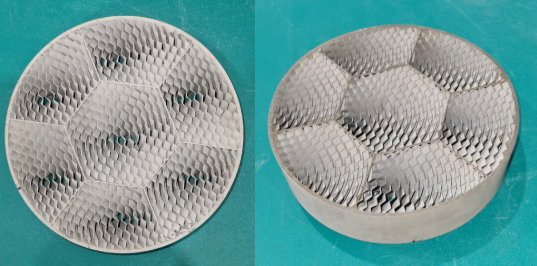
The PX100 Metal Binder Jetting system manufactures complex, production-grade parts, unlocking high-volume metal production at the point of need. The PX100 enables the Australian resources sector to rapidly produce complex, high-performance metal and ceramic components for mining equipment, critical minerals processing, energy applications, and on-demand tooling, boosting innovation and supply chain resilience. [AG8.1]
These state-of-the-art powder technologies, that will support the future of advanced manufacturing applications in the resources and energy sectors, are located in CSIRO’s Lab22.
Other key equipment on offer at Powder Lab
- Hosokawa Alpine Jet Mill/Classifier
- Air Jet Sieve e200 LS
- V-Blenders
- Tumbler mixers
- Powder characterisation, such as Mastersizer particle analyser, QICPIC particle analyser, Hall Flow meter, Revolution Powder Analyser, Tap density tester
If you’d like to know more about Powder Lab, or speak with one of the team, please get in touch.
Powder Lab's equipment that is unique in Australia
The Tekna Tek15 plasma spheroidisation equipment, with its external reactor, is the only machine of its type in Australia suited for developing powders from aluminium to tungsten. This equipment is available to industry for collaborative work.
And, with only a few operating in the world, the Nara Hybridisation Systems: NHS-0 and NHS-1, are the only machines of their kind in Australia, and are used for metal powder development work.
Tekna Tek15 Powder Spheroidization Plant
The Tek15 upgrades irregular, raw, or lower-grade metal and ceramic powders (and combinations) into uniform, spherical, and in some cases high-purity powders, increasing the commercial value of mining or intermediate products and improving resource efficiency. The system allows for the creation of custom alloyed powders tailored to specific industrial needs, supporting research and development efforts and fast-tracking material innovation for mining, energy, aerospace and defence applications.
Tekna Tek15 Powder Spheroidisation Plant converts non-spherical powders - such as those produced through crushing or water atomisation - into spherical powders optimised for additive manufacturing.
Nara Hybridisation Systems
The Nara Hybridisation systems are solid state milling systems originally developed by the Nara Machinery Co. Ltd in Japan. They are suitable for energy materials, agriculture and pharmaceutical milling, which CSIRO has pioneered, for metal based additive manufacturing and feedstock development.
The process, sometimes referred to as mechanofusion, surface filming, embedding or dry powder coating, generates a shell and core structure in the powder particles. It is ideal for unique combinations of metals, metal-ceramics, metal-polymers, and other hybrid powders used for grain inoculation (doping), composite materials, magnetic material, high entropy alloys development, and more.
CSIRO has used this technology to enhance the compaction of preforms from waste materials for titanium wire production, sphering and doping of graphite for enhanced battery anode production, production of doped wire and doped powders.
PX100 MarkForged Binder Jet Printer
CSIRO’s Lab 22 hosts one of only four complete PX100 production lines in the world. The MarkForged [WC7.1]PX100, a binder jet additive manufacturing tool, takes the powders produced by the Tekna Tek15 and the NHS to produce small, geometrically intricate components to medium sized objects. This process involves depositing a layer of custom-made powder into the build chamber, after which a binder print head selectively applies a binder to form the geometry of the part being designed.
The initial component, known as the "green part," is subsequently transferred to a sintering furnace for final processing. This technology supports both metal and ceramic applications. For components and applications where sintering is an appropriate manufacturing method, binder jetting may serve as a cost-effective and precise additive manufacturing solution. Similar to other additive manufacturing techniques, binder jetting facilitates complex geometric designs through its layer-by-layer approach, eliminating the need for traditional dies or moulds.
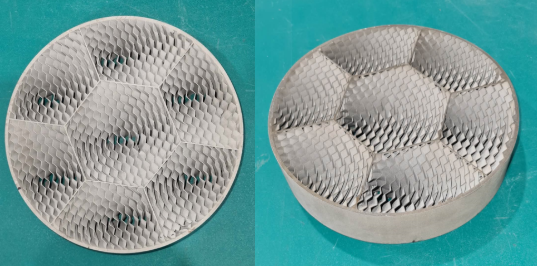
The PX100 Metal Binder Jetting system manufactures complex, production-grade parts, unlocking high-volume metal production at the point of need. The PX100 enables the Australian resources sector to rapidly produce complex, high-performance metal and ceramic components for mining equipment, critical minerals processing, energy applications, and on-demand tooling, boosting innovation and supply chain resilience. [AG8.1]
These state-of-the-art powder technologies, that will support the future of advanced manufacturing applications in the resources and energy sectors, are located in CSIRO’s Lab22.
Other key equipment on offer at Powder Lab
- Hosokawa Alpine Jet Mill/Classifier
- Air Jet Sieve e200 LS
- V-Blenders
- Tumbler mixers
- Powder characterisation, such as Mastersizer particle analyser, QICPIC particle analyser, Hall Flow meter, Revolution Powder Analyser, Tap density tester
If you’d like to know more about Powder Lab, or speak with one of the team, please get in touch.