
About
Aboriginal and/or Torres Strait Islander Peoples have used traditional separation techniques for thousands of years to separate and isolate desired materials. Year 7 students are invited to explore physical properties of matter, including particle size, mass, density, and solubility and how these influence the selection of appropriate separation techniques for wet and dry mixtures, including solutions, suspensions, and colloids.
Through teacher-led lessons, classroom activities, and experiments, students will explore techniques such as yandying, winnowing, filtration, cold pressing and heat-based oil extraction, analysing how these processes demonstrate an understanding that different mixtures require different methods to obtain a pure substance. Students will also make connections between these traditional techniques and scientific concepts, including the states of matter.
All educational materials are linked to the New South Wales (NSW) syllabus and Australian Curriculum (AC).
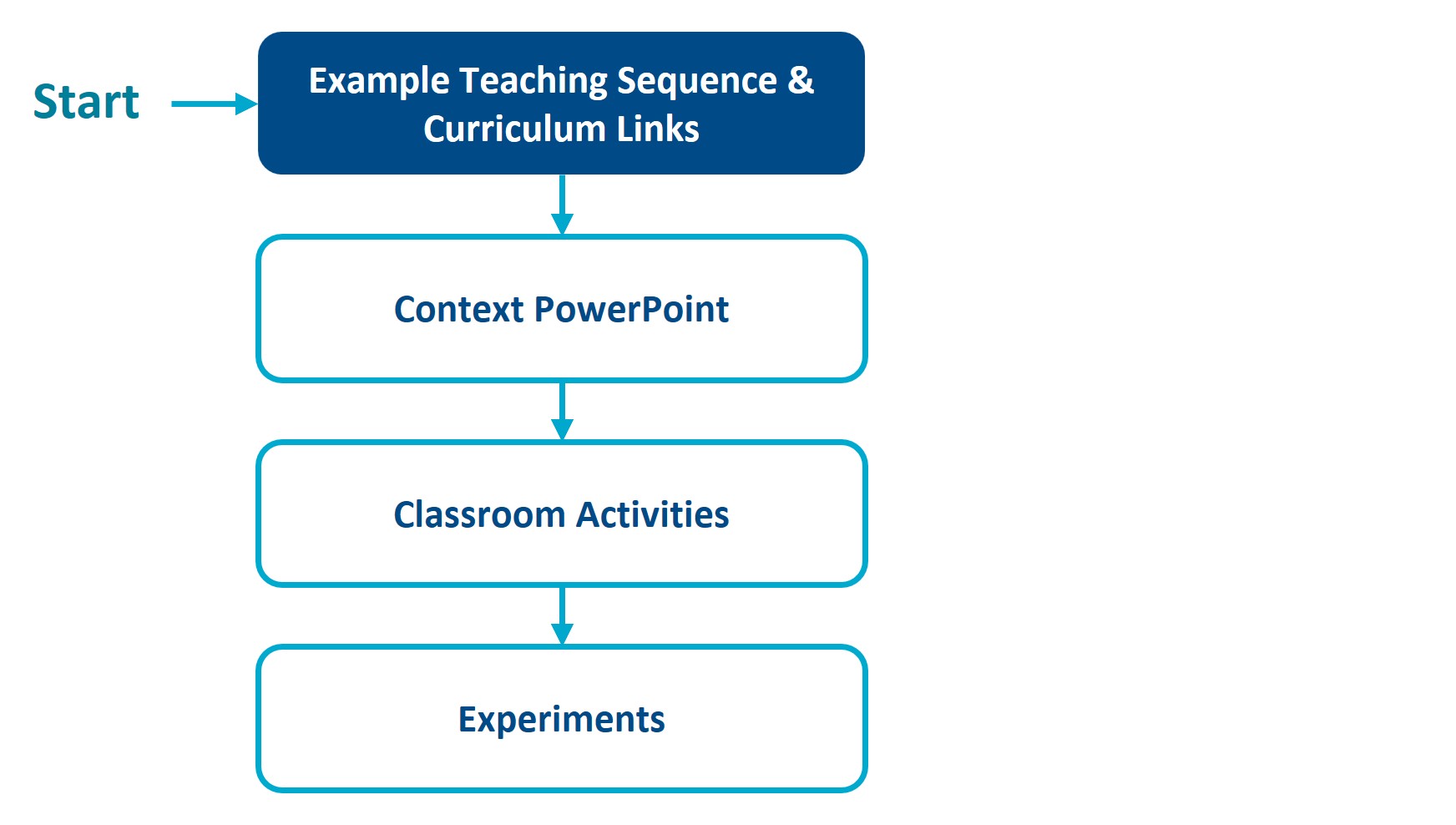
Use the diagram below to navigate your way through our resources.
Cultural Sensitivity: Aboriginal and Torres Strait Islander people should be aware that this module may contain images, voices and names of deceased persons. In some Aboriginal and Torres Strait Islander communities, hearing recordings, seeing images or the names of deceased persons may cause sadness or distress and in some cases, offend against strongly held cultural prohibitions.
Curriculum links
Australian Curriculum and syllabus connections
View how the traditional separation techniques resources can be linked to certain learning areas within the NSW syllabus and Australian Curriculum.
Australian Curriculum and Syllabus Links
Australian Curriculum and Syllabus Links - accessible version
Student and teacher resources
Example teaching sequence
This teaching sequence supports Year 7 teachers to deliver the traditional separation techniques topic aligned to the NSW syllabus and the Australian Curriculum. Use this as a guide when planning lessons and structuring learning across the unit.
AC Example Teaching Sequence - accessible version
NSW Example Teaching Sequence - accessible version
Context PowerPoint
This presentation provides background context for the traditional separation techniques topic including an introduction to pure substances and mixtures. Use it at the beginning of the unit sequence to build a foundational understanding of key concepts.

Classroom activities guide
This guide outlines a range of classroom activities to support students’ understanding of pure substances and mixtures. Use it to plan lessons to reinforce key ideas through discussion and hands-on learning.

Classroom Activities Guide - accessible version
Experiment resources
To prepare for the traditional separation techniques experiments, teachers should read the Teacher Experiment and Procedures Guide, which provides step-by-step instructions for conducting the experiments. The Equipment List and Hazard Management Guide outlines the materials required and key safety considerations. Teachers should use this resource during planning and before any practical activities.
Begin the lesson with the Traditional separation techniques Experiment PowerPoint, which guides students through the experimenting process and provides visual support for the experiments. Students use the Student Experiment Procedure and Planners, which detail the step-by-step procedures and provide space for recording observations, analysis, and reflections. These should be used during the practical activities alongside the PowerPoint to support student learning.
Click the button below to download the Traditional Separation Techniques Experiment Resources zip file, containing 3 different experiment resource files.
Experiment Resources- accessible version
About
Aboriginal and/or Torres Strait Islander Peoples have used traditional separation techniques for thousands of years to separate and isolate desired materials. Year 7 students are invited to explore physical properties of matter, including particle size, mass, density, and solubility and how these influence the selection of appropriate separation techniques for wet and dry mixtures, including solutions, suspensions, and colloids.
Through teacher-led lessons, classroom activities, and experiments, students will explore techniques such as yandying, winnowing, filtration, cold pressing and heat-based oil extraction, analysing how these processes demonstrate an understanding that different mixtures require different methods to obtain a pure substance. Students will also make connections between these traditional techniques and scientific concepts, including the states of matter.
All educational materials are linked to the New South Wales (NSW) syllabus and Australian Curriculum (AC).
Use the diagram below to navigate your way through our resources.

Cultural Sensitivity: Aboriginal and Torres Strait Islander people should be aware that this module may contain images, voices and names of deceased persons. In some Aboriginal and Torres Strait Islander communities, hearing recordings, seeing images or the names of deceased persons may cause sadness or distress and in some cases, offend against strongly held cultural prohibitions.
Curriculum links
Australian Curriculum and syllabus connections
View how the traditional separation techniques resources can be linked to certain learning areas within the NSW syllabus and Australian Curriculum.
Australian Curriculum and Syllabus Links PDF (245 KB)
Australian Curriculum and Syllabus Links - accessible version TXT (3 KB)
Student and teacher resources
Example teaching sequence
This teaching sequence supports Year 7 teachers to deliver the traditional separation techniques topic aligned to the NSW syllabus and the Australian Curriculum. Use this as a guide when planning lessons and structuring learning across the unit.

AC Example Teaching Sequence PDF (477 KB)
AC Example Teaching Sequence - accessible version TXT (16 KB)
NSW Example Teaching Sequence PDF (477 KB)
NSW Example Teaching Sequence - accessible version TXT (16 KB)
Context PowerPoint
This presentation provides background context for the traditional separation techniques topic including an introduction to pure substances and mixtures. Use it at the beginning of the unit sequence to build a foundational understanding of key concepts.

Context PowerPoint PPTX (97 MB)
Classroom activities guide
This guide outlines a range of classroom activities to support students’ understanding of pure substances and mixtures. Use it to plan lessons to reinforce key ideas through discussion and hands-on learning.
Classroom Activities Guide PDF (2 MB)
Classroom Activities Guide - accessible version TXT (25 KB)
Experiment resources
To prepare for the traditional separation techniques experiments, teachers should read the Teacher Experiment and Procedures Guide, which provides step-by-step instructions for conducting the experiments. The Equipment List and Hazard Management Guide outlines the materials required and key safety considerations. Teachers should use this resource during planning and before any practical activities.
Begin the lesson with the Traditional separation techniques Experiment PowerPoint, which guides students through the experimenting process and provides visual support for the experiments. Students use the Student Experiment Procedure and Planners, which detail the step-by-step procedures and provide space for recording observations, analysis, and reflections. These should be used during the practical activities alongside the PowerPoint to support student learning.
Click the button below to download the Traditional Separation Techniques Experiment Resources zip file, containing 3 different experiment resource files.

Experiment Resources ZIP (65 MB)
Experiment Resources- accessible version ZIP (61 MB)