The first of a new fleet of uncrewed surface vehicles (USVs) set off from CSIRO Hobart this week, as part of a mission monitoring the Southern Ocean to better understand how much carbon dioxide (CO₂) from the atmosphere is absorbed by the ocean surface.
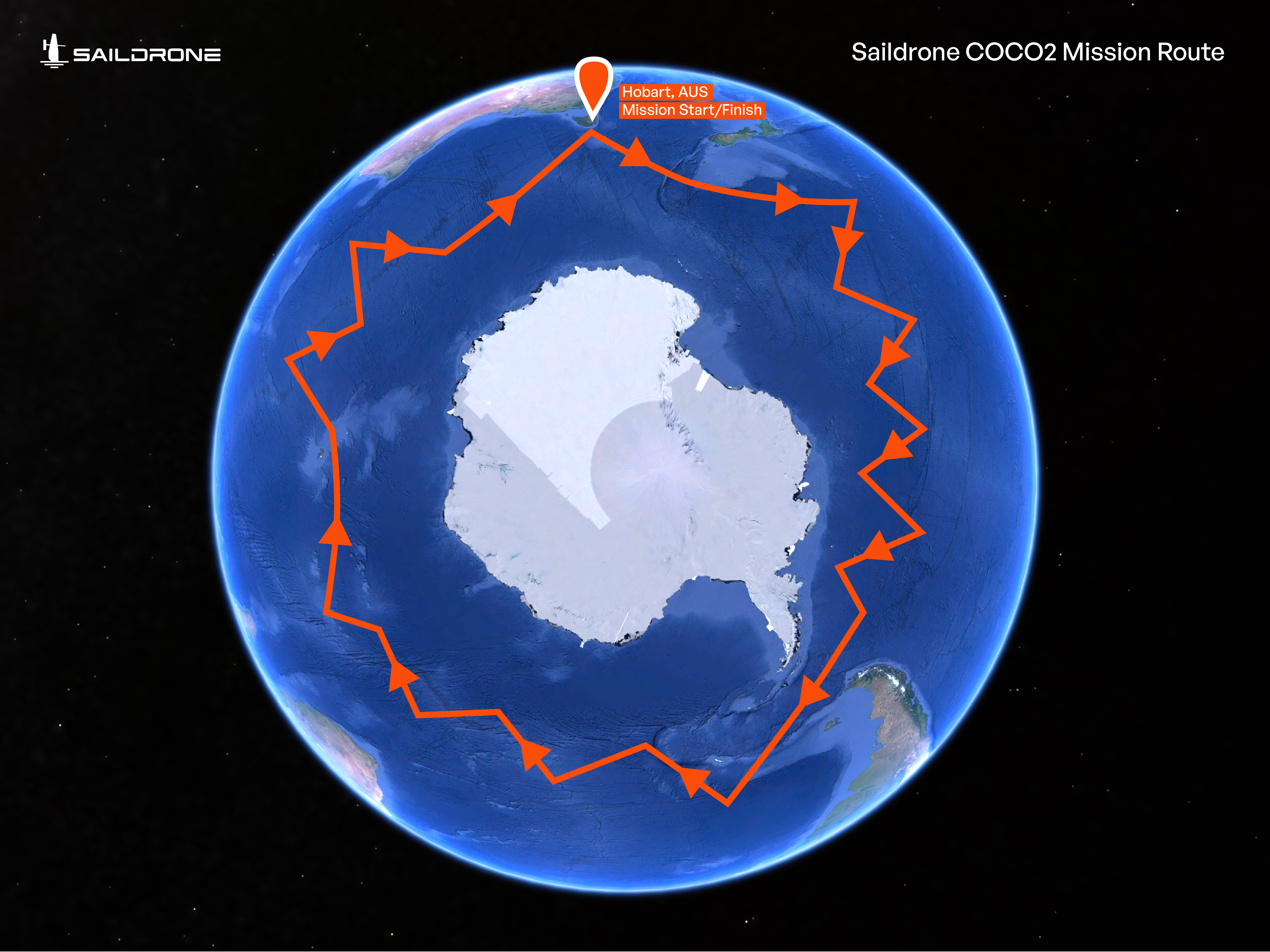
The USVs, made by Saildrone, will be deployed every quarter over five years to circumnavigate Antarctica, operating through the challenging conditions of the Southern Ocean.
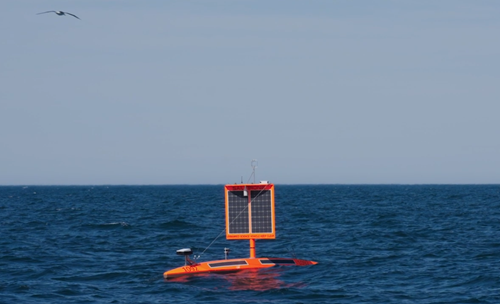
The USVs are an autonomous mobile research platform, powered by wind and solar energy. They will operate in remote waters for months at a time, recording data in real time to better understand ocean carbon sinks.
The project is part of an international collaboration between CSIRO, Australia’s national science agency and partner of the Australian Antarctic Program Partnership, the US National Oceanic and Atmospheric Administration (NOAA), South Africa’s Southern Ocean Carbon-Climate Observatory (SOCCO), CSIR, Columbia University, University of Washington, and Schmidt Sciences, through the Virtual Institute for the Carbon Cycle (VICC) program, and Saildrone, to capture data on ocean carbon sinks.
Ocean sinks store about a third of CO₂ absorbed from the atmosphere each year, with the Southern Ocean accounting for 40 per cent of global ocean CO₂ uptake, but more information is needed to better estimate how much CO₂ is absorbed.
CSIRO’s Dr Elizabeth Shadwick said this project is the first multi-year campaign to deploy USVs in the Southern Ocean specifically to acquire data in seasons and regions where ship traffic is limited.
“The Southern Ocean is central to the uptake and storage of CO₂ from human emissions,” Dr Shadwick said.
“The Saildrone USVs are expected to travel around 22,000 kilometres for each deployment, giving us unprecedented coverage of regions that we can’t get to with research vessels or commercial ships.
“This will help fill critical gaps on how much carbon is being absorbed by the Southern Ocean, and what influences it.”
Dr Adrienne Sutton from NOAA said using a range of innovative technologies, like USVs, will enable scientists to capture data on what is driving CO₂ variability.
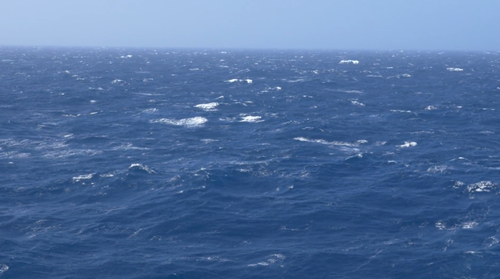
"The Southern Ocean is one of Earth's harshest environments and notoriously difficult to observe,” Dr Sutton said.
“This project brings together new tools to overcome this challenge and tackle long-standing questions about the ocean's carbon sink.
“We will have a fleet of four Saildrone Explorers operating at different points around the Southern Ocean. As a USV completes a circumnavigation of Antarctica, it will come back into Hobart where sensors will be replaced and the USV will be redeployed to start another circumnavigation. This pattern will continue for the duration of the five-year project.”
Professor Galen McKinley from Columbia University said instead of sailing pre-set routes, the USVs could conduct targeted data collection.
“We will be able to make adjustments over the course of the five-year mission to target data collection in the regions that are most needed to better understand the ocean carbon sink.
“We will also apply advanced, model- and AI observing tools to investigate carbon cycling in the Southern Ocean.”
Dr Sandy Thomalla from CSIR said this research project is of international significance.
“The Southern Ocean plays an important role in the global climate system. Understanding the processes controlling CO₂ uptake are central to having accurate projections of the Southern Ocean carbon sink in the future.
“By targeting Southern Ocean CO₂ measurements, including over winter, this fleet of sailing USVs will help close one of the most persistent data gaps in global observations.”
This research, as part of the Constraining Ocean Carbon with Optimized Observing (COCO2) project, will feed into the annual Global Carbon Budget, which quantifies the sources and sinks of CO₂ emissions, with the 2026 budget due to be released in November.
A Saildrone Explorer previously completed a 196-day circumnavigation of Antarctica in 2019. For this project, the USVs will be collecting continuous atmospheric and oceanographic observations, including:
- Atmospheric measurements: wind speed and direction, barometric pressure, relative humidity, air temperature, and atmospheric CO₂
- Oceanographic measurements: sea surface temperature, salinity, dissolved oxygen, and seawater CO₂.