
Climate Adaptation 2026
From forecasting hospital demand in heatwaves to helping farmers plan for the point where adapting isn't enough, CSIRO researchers will present more than a dozen adaptation projects at Climate Adaptation 2026 in Newcastle, 25–28 October 2026.
What adaptation means depends on where you stand. For a hospital, it means understanding and preparing for more frequent and severe heatwaves, which will bring more people through the emergency department. For a council or infrastructure manager, it means understanding the impacts of climate change on local government assets and deciding which need to be retired, replaced or upgraded. For a farmer, it means understanding when and how to change management practices. For governments and investors, it means working out how to pay for adaptation and avoid future risks. And for park managers and Traditional Owners, it means caring for places as they change. CSIRO researchers are working across all these questions and more.
As adaptation becomes more essential, here at CSIRO we are building our portfolio of research to support Australia’s resilient infrastructure and built environments; natural environments and ecosystem resilience; community and systems resilience as well as the delivery of technologies.

Climate change and health
According to the 2024 State of the Climate report, Heatwaves are an escalating public health crisis. They cause acute heat-related illness, worsen chronic conditions and drive increases in deaths, particularly among vulnerable people. Dr Jin Yoon and colleagues at CSIRO's Digital Transformation of Health Research Program have built a prototype that predicts how demand for emergency departments, hospital admissions and primary healthcare will rise around heatwave days, so health services can prepare rather than react.
Climate change affects our health in other ways too. For Australia’s first National Climate Risk Assessment, Dr Rajiv Jayasena and colleagues used machine learning and climate models to project how air quality and infectious diseases could change by 2050. They found that poorer air quality could lead to more deaths and hospital admissions, and that flu rates could rise substantially, especially under higher emissions. The team also mapped how viruses carried by animals could shift across Australia, and identified flu mutations linked to climate conditions.
"Climate change will affect our health in ways that aren't always obvious, from the air we breathe to how infectious diseases spread. Projections like these help health planners see what may be coming and prepare for it in advance."
Dr Rajiv Jayasena, CSIRO
From risk assessment to action
Australia's first National Climate Risk Assessment, supported by CSIRO, identified 56 nationally significant risks in its first pass, with the Australian Government selecting 11 of these risks for a detailed second pass assessment. This work has informed the National Adaptation Plan,
Knowing the risks is only the start. The common thread across CSIRO's adaptation work is what comes next: helping governments, industries and communities turn their risk assessments into investments in adaptation, collaborative governance and changed practice. While there is much still to do, this work draws on researchers from across CSIRO, from environment, health and energy to agriculture, and including partners ranging from the Bureau of Meteorology, Parks Australia and local councils to Traditional Owners, Indonesia's planning ministry and UNESCO.
Shaping national systems
Since 2016, CSIRO has worked in long-term partnerships with the Commonwealth agencies responsible for disaster management and resilience. Through these partnerships, CSIRO science has helped inform national guidance and strategic policy documents such as the Australian Vulnerability Profile, the Royal Commission into National Natural Disaster Arrangements Report, the National Disaster Risk Reduction Framework and its first and second National Action Plans. CSIRO also helped inform the Preparing Australia Communities programs and the Disaster Ready Fund, the Hazards Insurance Partnership,the National Resilience Action Library and co-developed the National Bushfire Intelligence Capability.
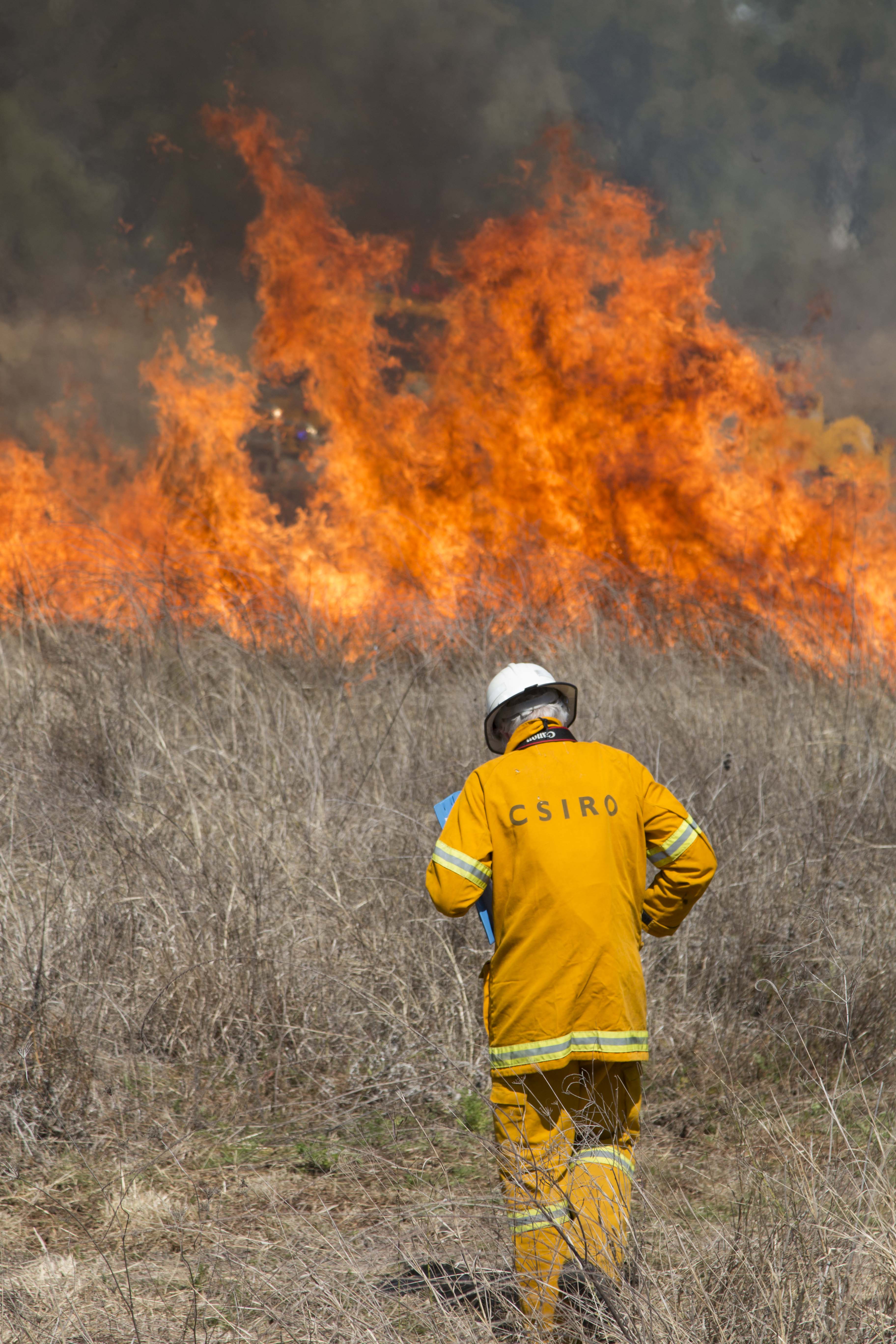
Dr Russ Wise and Paul Box are among many researchers who have supported a shift towards a more systemic national approach to disaster risk reduction. They helped Australia implement the global agreement to prevent new and reduce existing disaster risks called the Sendai Framework for Disaster Risk Reduction including through design and delivery of its mid-term review.
Understanding economic impacts
As part of its contribution to the Australian Climate Service, a joint CSIRO – Bureau of Meteorology team has updated projections of how future heat stress could cut outdoor workers' productivity. This information has been integrated into Treasury's projections of economic losses under climate change in the 2026 Intergenerational Report.
The nationwide hourly, high-resolution model outputs show the largest losses in hotter, more humid regions, and this capability could be used to test adaptation options such as changing when outdoor work happens.
Making the investment case
CSIRO's Enabling Resilience Investment approach generates location-based options to reduce risk, along with opportunities that create value such as jobs, infrastructure, social cohesion and incomes.
In Bega Valley, hit by compounding bushfires and COVID-19 impacts on tourism, work led by Dr Russ Wise’s team helped the council change its roles, responsibilities and approaches to managing combined stressors.
In the Illawarra-Shoalhaven, the team developed a flexible long-term approach to plan housing and infrastructure for the next 20 to 40 years in the face of climate and natural hazards. The multi-hazard disaster opportunity and risk assessment method has informed the NSW Disaster Adaptation Planning guidance.
Through the Telecommunications Resilience Investment Pilot, led by Paul Box, CSIRO is working with the telecommunications sector to understand vulnerabilities to natural hazards and the consequences of outages, and to identify interventions to enhance telecommunications community and businesses resilience, especially in remote and regional areas.
"The economic case for investing in adaptation is often strong, but that doesn't automatically make it financially attractive to an investor. The benefits of adaptation are generally experienced by many people spread across communities, sectors, and regions. But the benefits tend to be delayed and uncertain which means they can be discounted by investors relative to other opportunities which deliver immediate and certain benefits. Part of our work is finding ways to overcome these challenges to measuring, valuing and aggregating these many diverse and dispersed benefits so they can be funded and financed."
Dr Russ Wise, CSIRO
When adapting isn't enough
CSIRO is supporting communities to think about adaptation and helping inform best practice. In drought-prone regions of Western Australia, South Australia and New South Wales, Dr Yiheyis Maru surveyed 51 farmers and advisers and ran four participatory workshops. Participants felt that current business models were still working but recognised that where growing-season rainfall falls below critical thresholds, better practice alone may not keep grain production profitable. The options they explored ranged from mixed or livestock systems and new enterprises to off-farm income and planned exit.
For the Future Drought Fund, Regional Drought Resilience Planning Program, Dr Maru's team provided independent expert feedback on 69 regional drought resilience plans covering most of Australia. The plans were strong on evidence, engagement and partnerships, but short on future options. Many focused on maintaining current farming systems. These insights are informing the next phase of the Regional Drought Resilience Program which is implementation of the regional drought resilience plans.
Internationally, Dr Maru has developed seven principles to guide the Global Environment Facility's investments in sustainability transformations.
"The farmers and advisers we worked with were very clear-eyed. Most felt their businesses were still working, but could see that in some places better practice alone may not be enough as rainfall becomes less reliable. Having those conversations early, while there are still choices, gives families and communities more room to plan."
Dr Yiheyis Maru, CSIRO
Making climate information fit for purpose
Climate data is only useful if it is used. Dr Rebecca Darbyshire led a review of 91 scientific studies that investigated climate adaptation in Australian agriculture. The team highlighted the need for a greater understanding of adaptation options for other agricultural industries, as well as clearer methods to measure adaptation benefits. Her team also illustrated that the large volume of climate projection data now available can cause confusion around the implication of dataset selection and called for clearer guidance and earlier collaboration between the people who make climate data with those who use it.
The same challenge applies in business. CSIRO's Dr Michael Grose is part of a team arguing that physical climate risk assessments need to be more than a 'tick box' exercise, that they can help avoid losses, protect assets, and provide investor certainty. The NESP Climate Systems Hub have produced a handbook for climate scientists to help them understand the business and finance worlds.
The Northern Australia Water Resource Assessments (NAWRA) also provided much-needed data to inform decisions regarding water use in the region. NAWRA identified agriculturally valuable soils, currently dependable water resources and their overlap, and prioritised them in terms of location and distance to market. Updating these data with future water availability scenarios will highlight where regional agriculture may be focussed in the future, and where a managed transition to other management systems will be required.
Councils and communities
Dr Seona Meharg and colleagues worked with South Australia's City of Holdfast Bay and the Resilient South councils on the Enhanced Resilient Asset Delivery project to help build climate risk into everyday asset and investment decisions. Through workshops with staff from asset management, sustainability, finance, governance and risk, the team mapped existing practices, barriers and decision pathways, and helped the council document its climate-resilient practice. The plan focuses as much on leadership, governance and organisational culture as on technical fixes, and offers a model other councils can adopt.
Dr Aysha Fleming has compared two national programs that co-produce climate information with primary producers: Climate Services for Agriculture on land and Sea Change Australia at sea. She found often-overlooked similarities between farmers and seafood producers, and that trusted learning networks across sectors could help scale what works.

Building for the future climate
Buildings designed today will still be standing in the 2070s, but they’re mostly designed using past weather scenarios. CSIRO’s Dr Zhengen Ren and colleagues created weather files that show what Australia’s climate could look like in future, for every climate zone in the country and under a range of emissions scenarios. The federal government now recommends these files for energy modelling of all new commercial buildings, helping Australia build for the climate to come rather than the one we’ve had. Dr Ren also contributed to the Building for the Future project in the NESP Climate Systems Hub, which developed future weather files for residential building simulation. The files covered 11 locations across Australia's climate zones, two emissions scenarios and three future time periods (2030, 2050 and 2070), including extreme years that capture heatwaves. The future weather files work with NatHERS-accredited building simulation software.
Nature and protected places
Climate change has the potential to transform ecosystems. In South Australia, Dr Mike Dunlop and colleagues worked with the state Department for Environment and Water to explore the potential consequences of future ecological transformation in the Coorong, Lower Lakes and Murray Mouth arising from decreasing river flows and rising sea level. The project provided analyses, insights and tools to help managers identify implications for the values of the system, management objectives and future decision making.
In 2020, CSIRO worked with the Commonwealth Department of Climate Change, Energy, the Environment and Water (DCCEEW) and World Heritage Australia to co-develop a climate risk scan and toolkit with all of Australia's World Heritage sites. Through the NESP Climate Systems Hub, that work is continuing at K'gari (Great Sandy National Park), Kakadu and Uluṟu-Kata Tjuṯa, and a team led by Dr Brenda Lin is working with UNESCO on a toolkit for all World Heritage sites worldwide. CSIRO is working with several of these sites to develop adaptation capability and plans.
First Nations knowledge and leadership
First Peoples' knowledge, values, customary governance and perspectives on risk are integral to approaches to adaptation. Through the NESP Climate Systems Hub, at Shark Bay (Gathaagudu), CSIRO's Pethie Lyons pilots knowledge-sharing tools on research led by the Malgana community. The project uses values mapping, stories of change including a Malgana timeline, and seasonal calendars to bring Malgana perspectives of risk and opportunities for change into adaptation planning. This project built on lessons from climate adaptation work previously undertaken in the Great Barrier Reef World Heritage Areas.

Damian Morgan-Bulled, the NESP Climate Systems Hub's Senior Indigenous Facilitator, leads the project for Indigenous-led literature and products to inform national and international processes on climate action. The project's work is being delivered through case studies on coastal impacts, marine heatwaves, the big wet and big dry, fire in Country, youth voices, extreme heat and governance.
Overseas
In Indonesia, Dr Geoff Lee and his CSIRO team are working with the national planning ministry Bappenas and the Indonesia-Australia Infrastructure Partnership to model flooding, coastal inundation, landslides, severe wind and wildfire across the country's transport, electricity and telecommunications infrastructure. Under a high emissions scenario, average annual losses could rise around 3.5 times by the 2040s. An assessment of the national road network, drawing on global climate models, found the share of roads classified as high-risk of damage could more than double.
Meanwhile in the Pacific, Dr Seona Meharg is leading a capacity-building program, funded by the Australia Pacific Climate Partnership. It has strengthened Pacific knowledge brokers who help their governments and communities adapt. Evaluations show 90 train-the-trainer alumni have gone on to train more than 1,400 others across Solomon Islands, Papua New Guinea, Vanuatu, Samoa, Tonga, Kiribati and Fiji. The Pacific Climate Change Centre, hosted at SPREP, is now sharing the materials and continuing the training with communities and governments.
Whether you run a hospital, manage a council’s roads, farm in a drying region or care for Country, adapting to climate change is already part of the job. CSIRO has made adaptation a research priority so that Australians, and our Pacific partners, have the science, tools and partnerships to do it well.
Climate Adaptation 2026
From forecasting hospital demand in heatwaves to helping farmers plan for the point where adapting isn't enough, CSIRO researchers will present more than a dozen adaptation projects at Climate Adaptation 2026 in Newcastle, 25–28 October 2026.
What adaptation means depends on where you stand. For a hospital, it means understanding and preparing for more frequent and severe heatwaves, which will bring more people through the emergency department. For a council or infrastructure manager, it means understanding the impacts of climate change on local government assets and deciding which need to be retired, replaced or upgraded. For a farmer, it means understanding when and how to change management practices. For governments and investors, it means working out how to pay for adaptation and avoid future risks. And for park managers and Traditional Owners, it means caring for places as they change. CSIRO researchers are working across all these questions and more.
As adaptation becomes more essential, here at CSIRO we are building our portfolio of research to support Australia’s resilient infrastructure and built environments; natural environments and ecosystem resilience; community and systems resilience as well as the delivery of technologies.
Climate change and health
According to the 2024 State of the Climate report, Heatwaves are an escalating public health crisis. They cause acute heat-related illness, worsen chronic conditions and drive increases in deaths, particularly among vulnerable people. Dr Jin Yoon and colleagues at CSIRO's Digital Transformation of Health Research Program have built a prototype that predicts how demand for emergency departments, hospital admissions and primary healthcare will rise around heatwave days, so health services can prepare rather than react.
Climate change affects our health in other ways too. For Australia’s first National Climate Risk Assessment, Dr Rajiv Jayasena and colleagues used machine learning and climate models to project how air quality and infectious diseases could change by 2050. They found that poorer air quality could lead to more deaths and hospital admissions, and that flu rates could rise substantially, especially under higher emissions. The team also mapped how viruses carried by animals could shift across Australia, and identified flu mutations linked to climate conditions.
"Climate change will affect our health in ways that aren't always obvious, from the air we breathe to how infectious diseases spread. Projections like these help health planners see what may be coming and prepare for it in advance."
Dr Rajiv Jayasena, CSIRO
From risk assessment to action
Australia's first National Climate Risk Assessment, supported by CSIRO, identified 56 nationally significant risks in its first pass, with the Australian Government selecting 11 of these risks for a detailed second pass assessment. This work has informed the National Adaptation Plan,
Knowing the risks is only the start. The common thread across CSIRO's adaptation work is what comes next: helping governments, industries and communities turn their risk assessments into investments in adaptation, collaborative governance and changed practice. While there is much still to do, this work draws on researchers from across CSIRO, from environment, health and energy to agriculture, and including partners ranging from the Bureau of Meteorology, Parks Australia and local councils to Traditional Owners, Indonesia's planning ministry and UNESCO.
Shaping national systems
Since 2016, CSIRO has worked in long-term partnerships with the Commonwealth agencies responsible for disaster management and resilience. Through these partnerships, CSIRO science has helped inform national guidance and strategic policy documents such as the Australian Vulnerability Profile, the Royal Commission into National Natural Disaster Arrangements Report, the National Disaster Risk Reduction Framework and its first and second National Action Plans. CSIRO also helped inform the Preparing Australia Communities programs and the Disaster Ready Fund, the Hazards Insurance Partnership,the National Resilience Action Library and co-developed the National Bushfire Intelligence Capability.
Dr Russ Wise and Paul Box are among many researchers who have supported a shift towards a more systemic national approach to disaster risk reduction. They helped Australia implement the global agreement to prevent new and reduce existing disaster risks called the Sendai Framework for Disaster Risk Reduction including through design and delivery of its mid-term review.
Understanding economic impacts
As part of its contribution to the Australian Climate Service, a joint CSIRO – Bureau of Meteorology team has updated projections of how future heat stress could cut outdoor workers' productivity. This information has been integrated into Treasury's projections of economic losses under climate change in the 2026 Intergenerational Report.
The nationwide hourly, high-resolution model outputs show the largest losses in hotter, more humid regions, and this capability could be used to test adaptation options such as changing when outdoor work happens.
Making the investment case
CSIRO's Enabling Resilience Investment approach generates location-based options to reduce risk, along with opportunities that create value such as jobs, infrastructure, social cohesion and incomes.
In Bega Valley, hit by compounding bushfires and COVID-19 impacts on tourism, work led by Dr Russ Wise’s team helped the council change its roles, responsibilities and approaches to managing combined stressors.
In the Illawarra-Shoalhaven, the team developed a flexible long-term approach to plan housing and infrastructure for the next 20 to 40 years in the face of climate and natural hazards. The multi-hazard disaster opportunity and risk assessment method has informed the NSW Disaster Adaptation Planning guidance.
Through the Telecommunications Resilience Investment Pilot, led by Paul Box, CSIRO is working with the telecommunications sector to understand vulnerabilities to natural hazards and the consequences of outages, and to identify interventions to enhance telecommunications community and businesses resilience, especially in remote and regional areas.
"The economic case for investing in adaptation is often strong, but that doesn't automatically make it financially attractive to an investor. The benefits of adaptation are generally experienced by many people spread across communities, sectors, and regions. But the benefits tend to be delayed and uncertain which means they can be discounted by investors relative to other opportunities which deliver immediate and certain benefits. Part of our work is finding ways to overcome these challenges to measuring, valuing and aggregating these many diverse and dispersed benefits so they can be funded and financed."
Dr Russ Wise, CSIRO
When adapting isn't enough
CSIRO is supporting communities to think about adaptation and helping inform best practice. In drought-prone regions of Western Australia, South Australia and New South Wales, Dr Yiheyis Maru surveyed 51 farmers and advisers and ran four participatory workshops. Participants felt that current business models were still working but recognised that where growing-season rainfall falls below critical thresholds, better practice alone may not keep grain production profitable. The options they explored ranged from mixed or livestock systems and new enterprises to off-farm income and planned exit.
For the Future Drought Fund, Regional Drought Resilience Planning Program, Dr Maru's team provided independent expert feedback on 69 regional drought resilience plans covering most of Australia. The plans were strong on evidence, engagement and partnerships, but short on future options. Many focused on maintaining current farming systems. These insights are informing the next phase of the Regional Drought Resilience Program which is implementation of the regional drought resilience plans.
Internationally, Dr Maru has developed seven principles to guide the Global Environment Facility's investments in sustainability transformations.
"The farmers and advisers we worked with were very clear-eyed. Most felt their businesses were still working, but could see that in some places better practice alone may not be enough as rainfall becomes less reliable. Having those conversations early, while there are still choices, gives families and communities more room to plan."
Dr Yiheyis Maru, CSIRO
Making climate information fit for purpose
Climate data is only useful if it is used. Dr Rebecca Darbyshire led a review of 91 scientific studies that investigated climate adaptation in Australian agriculture. The team highlighted the need for a greater understanding of adaptation options for other agricultural industries, as well as clearer methods to measure adaptation benefits. Her team also illustrated that the large volume of climate projection data now available can cause confusion around the implication of dataset selection and called for clearer guidance and earlier collaboration between the people who make climate data with those who use it.
The same challenge applies in business. CSIRO's Dr Michael Grose is part of a team arguing that physical climate risk assessments need to be more than a 'tick box' exercise, that they can help avoid losses, protect assets, and provide investor certainty. The NESP Climate Systems Hub have produced a handbook for climate scientists to help them understand the business and finance worlds.
The Northern Australia Water Resource Assessments (NAWRA) also provided much-needed data to inform decisions regarding water use in the region. NAWRA identified agriculturally valuable soils, currently dependable water resources and their overlap, and prioritised them in terms of location and distance to market. Updating these data with future water availability scenarios will highlight where regional agriculture may be focussed in the future, and where a managed transition to other management systems will be required.
Councils and communities
Dr Seona Meharg and colleagues worked with South Australia's City of Holdfast Bay and the Resilient South councils on the Enhanced Resilient Asset Delivery project to help build climate risk into everyday asset and investment decisions. Through workshops with staff from asset management, sustainability, finance, governance and risk, the team mapped existing practices, barriers and decision pathways, and helped the council document its climate-resilient practice. The plan focuses as much on leadership, governance and organisational culture as on technical fixes, and offers a model other councils can adopt.
Dr Aysha Fleming has compared two national programs that co-produce climate information with primary producers: Climate Services for Agriculture on land and Sea Change Australia at sea. She found often-overlooked similarities between farmers and seafood producers, and that trusted learning networks across sectors could help scale what works.
Building for the future climate
Buildings designed today will still be standing in the 2070s, but they’re mostly designed using past weather scenarios. CSIRO’s Dr Zhengen Ren and colleagues created weather files that show what Australia’s climate could look like in future, for every climate zone in the country and under a range of emissions scenarios. The federal government now recommends these files for energy modelling of all new commercial buildings, helping Australia build for the climate to come rather than the one we’ve had. Dr Ren also contributed to the Building for the Future project in the NESP Climate Systems Hub, which developed future weather files for residential building simulation. The files covered 11 locations across Australia's climate zones, two emissions scenarios and three future time periods (2030, 2050 and 2070), including extreme years that capture heatwaves. The future weather files work with NatHERS-accredited building simulation software.
Nature and protected places
Climate change has the potential to transform ecosystems. In South Australia, Dr Mike Dunlop and colleagues worked with the state Department for Environment and Water to explore the potential consequences of future ecological transformation in the Coorong, Lower Lakes and Murray Mouth arising from decreasing river flows and rising sea level. The project provided analyses, insights and tools to help managers identify implications for the values of the system, management objectives and future decision making.
In 2020, CSIRO worked with the Commonwealth Department of Climate Change, Energy, the Environment and Water (DCCEEW) and World Heritage Australia to co-develop a climate risk scan and toolkit with all of Australia's World Heritage sites. Through the NESP Climate Systems Hub, that work is continuing at K'gari (Great Sandy National Park), Kakadu and Uluṟu-Kata Tjuṯa, and a team led by Dr Brenda Lin is working with UNESCO on a toolkit for all World Heritage sites worldwide. CSIRO is working with several of these sites to develop adaptation capability and plans.
First Nations knowledge and leadership
First Peoples' knowledge, values, customary governance and perspectives on risk are integral to approaches to adaptation. Through the NESP Climate Systems Hub, at Shark Bay (Gathaagudu), CSIRO's Pethie Lyons pilots knowledge-sharing tools on research led by the Malgana community. The project uses values mapping, stories of change including a Malgana timeline, and seasonal calendars to bring Malgana perspectives of risk and opportunities for change into adaptation planning. This project built on lessons from climate adaptation work previously undertaken in the Great Barrier Reef World Heritage Areas.
Damian Morgan-Bulled, the NESP Climate Systems Hub's Senior Indigenous Facilitator, leads the project for Indigenous-led literature and products to inform national and international processes on climate action. The project's work is being delivered through case studies on coastal impacts, marine heatwaves, the big wet and big dry, fire in Country, youth voices, extreme heat and governance.
Overseas
In Indonesia, Dr Geoff Lee and his CSIRO team are working with the national planning ministry Bappenas and the Indonesia-Australia Infrastructure Partnership to model flooding, coastal inundation, landslides, severe wind and wildfire across the country's transport, electricity and telecommunications infrastructure. Under a high emissions scenario, average annual losses could rise around 3.5 times by the 2040s. An assessment of the national road network, drawing on global climate models, found the share of roads classified as high-risk of damage could more than double.
Meanwhile in the Pacific, Dr Seona Meharg is leading a capacity-building program, funded by the Australia Pacific Climate Partnership. It has strengthened Pacific knowledge brokers who help their governments and communities adapt. Evaluations show 90 train-the-trainer alumni have gone on to train more than 1,400 others across Solomon Islands, Papua New Guinea, Vanuatu, Samoa, Tonga, Kiribati and Fiji. The Pacific Climate Change Centre, hosted at SPREP, is now sharing the materials and continuing the training with communities and governments.
Whether you run a hospital, manage a council’s roads, farm in a drying region or care for Country, adapting to climate change is already part of the job. CSIRO has made adaptation a research priority so that Australians, and our Pacific partners, have the science, tools and partnerships to do it well.