
Key points
- InFarm is an Australian agricultural AI company whose weed-detection platform has helped farmers cut herbicide use by up to 95 per cent.
- Through the Queensland Government-funded Regional University Industry Collaboration (RUIC) program delivered by CSIRO, InFarm collaborated with CQUniversity researchers to build a foundational AI model adapted to Australian farming conditions.
- InFarm is now looking to apply the technology beyond weed detection into animal health and other agricultural applications.
Ask any farmer and they’ll tell you: no two paddocks are the same.
Shadows shift through the day. Weed species vary from region to region, season to season, property to property. Row spacings differ. Crops behave differently. What works in one paddock can fail in the next - and what works in Kansas almost certainly won’t work in Queensland.
That matters, because most agricultural artificial intelligence (AI) platforms were not built here in Australia. Global systems, InFarm notes, were largely trained on European and United States farm data - environments that look and behave quite differently from Australian ones. Off-the-shelf AI algorithms have not been trained for Australian conditions and aren’t well suited to them.
But building a replacement isn’t simply a matter of retraining on local data. Australian conditions vary so much that a model built for one crop or one paddock can fail in the next.
That’s the problem InFarm set out to solve.
Building AI for Australian conditions
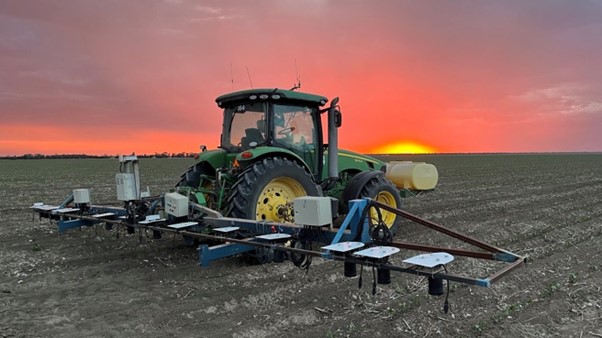
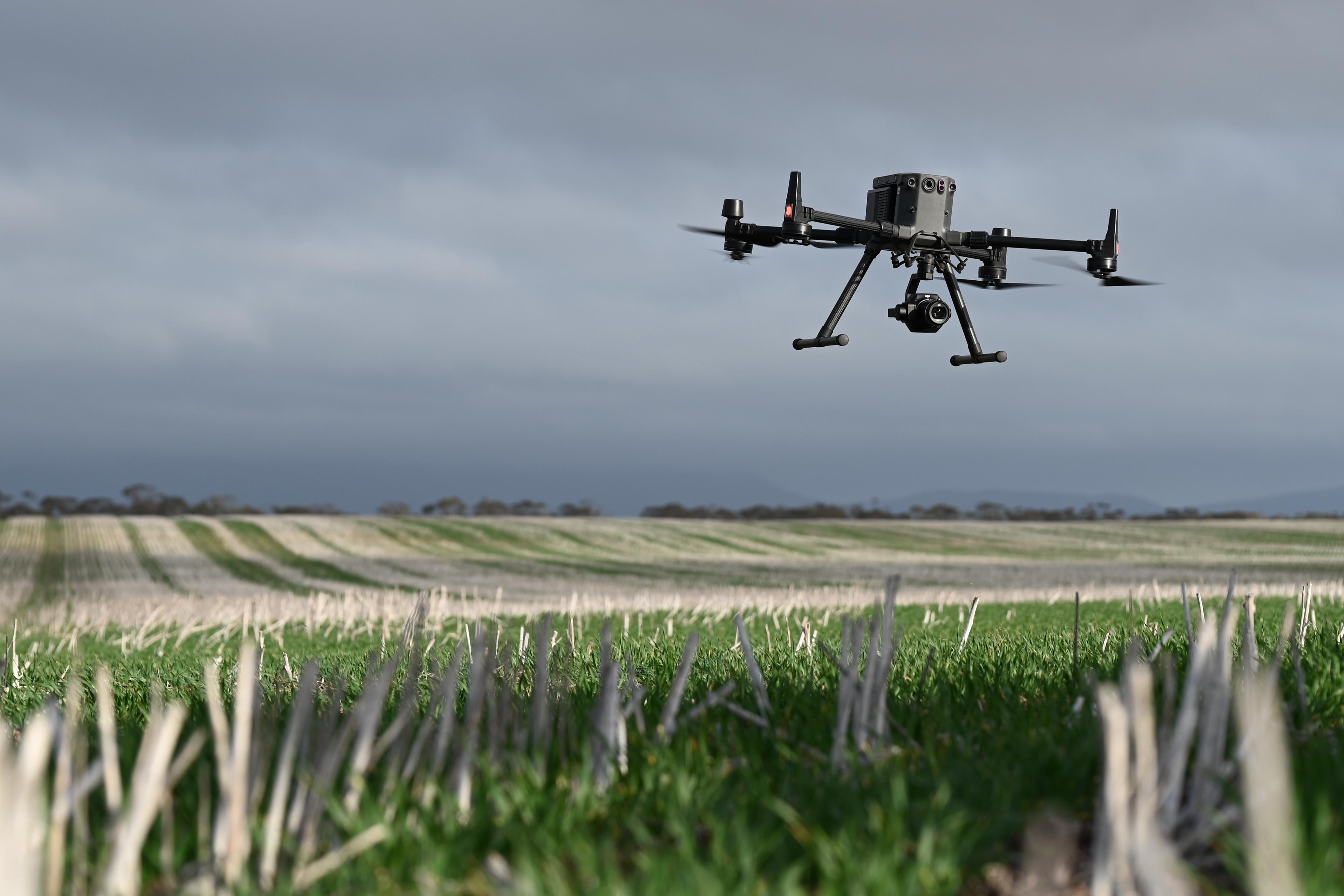
Based in Goondiwindi, Queensland, InFarm develops tools that help farmers work more efficiently, more profitably, and more sustainably. Its best-known product pairs drone imagery with a farmer’s existing tractor to target weeds with precision. But that product sits on top of a hard problem in agricultural AI: how do you build foundational models that generalise the industry, rather than only working in one crop or one paddock?
It’s a research question as much as a product one and it’s not one InFarm could answer alone.
What is RUIC?
The Regional University Industry Collaboration (RUIC) program is funded by the Queensland Government and delivered by CSIRO. It connects Queensland small and medium businesses with researchers from four regional universities and provides facilitated dollar-matched funding to support collaborative research and development projects. The program is designed to bring research capability directly into businesses, embedding researchers alongside commercial teams to work on real problems.
Luke Deacon, Senior Facilitator – RUIC, worked with InFarm to scope the collaboration with CQUniversity. "InFarm had a genuinely hard research problem, not something you can just buy off the shelf - so the fit with CQUniversity's team was about finding researchers who could go deep on it with them. That's the part of RUIC I find most satisfying: finding a research team that can support the company with a hard challenge, and getting the scoping right early so the collaboration has something real to work on from day one."
Billions of variables
The RUIC program connected InFarm with CQUniversity’s research team, and together they’ve been working through the problem from the inside. “Agriculture has billions of variables, and they’re constantly changing - the shadows in a field, the size of the weeds you’re trying to detect, the size of the crop, the row spacings, is it dry or wet and countless others,” said Jerome Leray, Managing Director of InFarm.
“Building a system that can adapt across all of those conditions is one of the key questions that has to be answered to make AI genuinely robust in the real world and at commercial scale for agriculture.”
There’s a second, more technical hurdle too. The underlying AI models used in other industries are typically trained on clean, clearly defined objects that take up a substantial portion of an image - a strong signal to learn from. A lot of agriculture isn’t like that. The things farmers care about detecting can be small and low-signal. Think of a weed growing up underneath the crop, with only part of a leaf poking through into the row. The model isn’t looking at a whole, obvious plant – it has to learn to pick out that sliver of signal and act on it.
Solving that was where the collaboration started.
What the RUIC collaboration delivered
The collaboration focused on teaching AI models to learn from large volumes of images that hadn’t been manually labelled - a technique that speeds up training and improves accuracy, without the time and cost of tagging thousands of images by hand, and one that helps models pick up the small, low-signal detail that standard training misses.
The team also built a system for surfacing the edge cases that break standard models in the real world. Surfacing that data lets InFarm rapidly improve its models and build robustness into them.
Making the technology work without a reliable internet connection, so it works wherever growers are, was another focus. With RUIC’s support InFarm has continued developing the technology and platform that sits behind all of this.
Professor Philip Brown, Associate Professor Paul Kwan and Dr Mitchell Woodbright led the CQUniversity side of the work.
“This project is about making AI work in the real-world complexity of Australian agriculture. By developing models that can learn from unlabelled data and adapt to highly variable conditions, we’re helping bridge the gap between cutting-edge research and practical tools farmers can rely on in the paddock. The collaboration with InFarm has allowed us to test and refine these approaches in an applied setting, which is critical for building robust, scalable agricultural AI,” said Associate Professor Kwan from CQUniversity’s School of Science and Technology.
For InFarm, it was the embedded researcher model that made RUIC distinctive - and a sign of something broader.
“The RUIC program was fantastic for us. It let us embed an early career researcher into our company to come and work on a particular problem, and to help us develop and research something that could benefit both InFarm and the broader agricultural industry,” Mr Leray said.
“It was immensely valuable - closing the connection between commercial businesses and the research sector, asking how we do applied research.”
Building more of those connections is what RUIC was set up to do – bringing some of the best and brightest researchers from regional universities and putting them on to the problems facing businesses on the ground.
From weed detection to what’s next
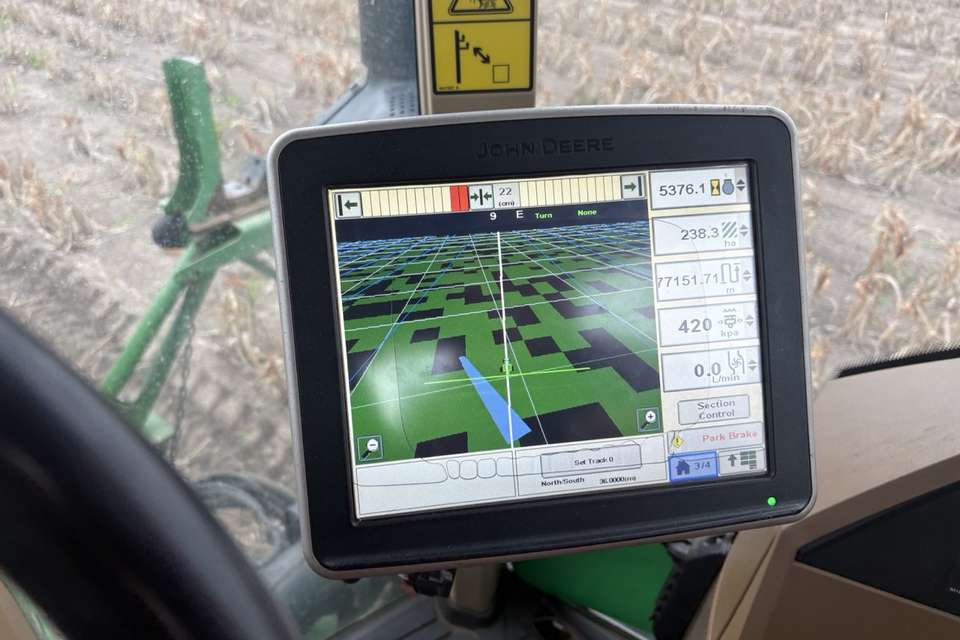
With the foundational technology and platform further developed, InFarm is now looking to apply it to other problems. The company’s current focus spans weeds, grazing and farming systems, and livestock animal health. The next step is bringing in additional inputs alongside drone imagery - GPS location, sensor data, other signals - to guide and improve the models.
The ambition is simple: take what has been built for weed detection and apply it to the next hard problem in Australian agriculture.
Learn more about how your business can benefit from the RUIC program
Key points
- InFarm is an Australian agricultural AI company whose weed-detection platform has helped farmers cut herbicide use by up to 95 per cent.
- Through the Queensland Government-funded Regional University Industry Collaboration (RUIC) program delivered by CSIRO, InFarm collaborated with CQUniversity researchers to build a foundational AI model adapted to Australian farming conditions.
- InFarm is now looking to apply the technology beyond weed detection into animal health and other agricultural applications.
Ask any farmer and they’ll tell you: no two paddocks are the same.
Shadows shift through the day. Weed species vary from region to region, season to season, property to property. Row spacings differ. Crops behave differently. What works in one paddock can fail in the next - and what works in Kansas almost certainly won’t work in Queensland.
That matters, because most agricultural artificial intelligence (AI) platforms were not built here in Australia. Global systems, InFarm notes, were largely trained on European and United States farm data - environments that look and behave quite differently from Australian ones. Off-the-shelf AI algorithms have not been trained for Australian conditions and aren’t well suited to them.
But building a replacement isn’t simply a matter of retraining on local data. Australian conditions vary so much that a model built for one crop or one paddock can fail in the next.
That’s the problem InFarm set out to solve.
Building AI for Australian conditions
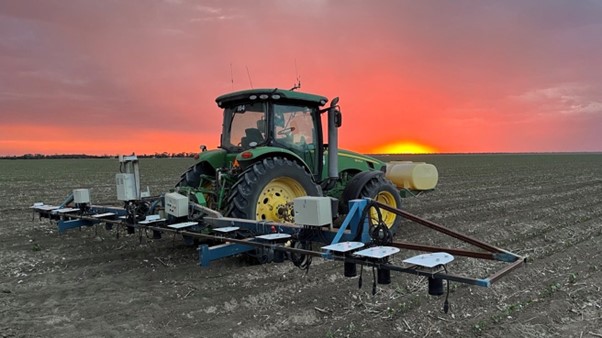
Based in Goondiwindi, Queensland, InFarm develops tools that help farmers work more efficiently, more profitably, and more sustainably. Its best-known product pairs drone imagery with a farmer’s existing tractor to target weeds with precision. But that product sits on top of a hard problem in agricultural AI: how do you build foundational models that generalise the industry, rather than only working in one crop or one paddock?
It’s a research question as much as a product one and it’s not one InFarm could answer alone.
What is RUIC?
The Regional University Industry Collaboration (RUIC) program is funded by the Queensland Government and delivered by CSIRO. It connects Queensland small and medium businesses with researchers from four regional universities and provides facilitated dollar-matched funding to support collaborative research and development projects. The program is designed to bring research capability directly into businesses, embedding researchers alongside commercial teams to work on real problems.
Luke Deacon, Senior Facilitator – RUIC, worked with InFarm to scope the collaboration with CQUniversity. "InFarm had a genuinely hard research problem, not something you can just buy off the shelf - so the fit with CQUniversity's team was about finding researchers who could go deep on it with them. That's the part of RUIC I find most satisfying: finding a research team that can support the company with a hard challenge, and getting the scoping right early so the collaboration has something real to work on from day one."
Billions of variables
The RUIC program connected InFarm with CQUniversity’s research team, and together they’ve been working through the problem from the inside. “Agriculture has billions of variables, and they’re constantly changing - the shadows in a field, the size of the weeds you’re trying to detect, the size of the crop, the row spacings, is it dry or wet and countless others,” said Jerome Leray, Managing Director of InFarm.
“Building a system that can adapt across all of those conditions is one of the key questions that has to be answered to make AI genuinely robust in the real world and at commercial scale for agriculture.”
There’s a second, more technical hurdle too. The underlying AI models used in other industries are typically trained on clean, clearly defined objects that take up a substantial portion of an image - a strong signal to learn from. A lot of agriculture isn’t like that. The things farmers care about detecting can be small and low-signal. Think of a weed growing up underneath the crop, with only part of a leaf poking through into the row. The model isn’t looking at a whole, obvious plant – it has to learn to pick out that sliver of signal and act on it.
Solving that was where the collaboration started.
What the RUIC collaboration delivered
The collaboration focused on teaching AI models to learn from large volumes of images that hadn’t been manually labelled - a technique that speeds up training and improves accuracy, without the time and cost of tagging thousands of images by hand, and one that helps models pick up the small, low-signal detail that standard training misses.
The team also built a system for surfacing the edge cases that break standard models in the real world. Surfacing that data lets InFarm rapidly improve its models and build robustness into them.
Making the technology work without a reliable internet connection, so it works wherever growers are, was another focus. With RUIC’s support InFarm has continued developing the technology and platform that sits behind all of this.
Professor Philip Brown, Associate Professor Paul Kwan and Dr Mitchell Woodbright led the CQUniversity side of the work.
“This project is about making AI work in the real-world complexity of Australian agriculture. By developing models that can learn from unlabelled data and adapt to highly variable conditions, we’re helping bridge the gap between cutting-edge research and practical tools farmers can rely on in the paddock. The collaboration with InFarm has allowed us to test and refine these approaches in an applied setting, which is critical for building robust, scalable agricultural AI,” said Associate Professor Kwan from CQUniversity’s School of Science and Technology.
For InFarm, it was the embedded researcher model that made RUIC distinctive - and a sign of something broader.
“The RUIC program was fantastic for us. It let us embed an early career researcher into our company to come and work on a particular problem, and to help us develop and research something that could benefit both InFarm and the broader agricultural industry,” Mr Leray said.
“It was immensely valuable - closing the connection between commercial businesses and the research sector, asking how we do applied research.”
Building more of those connections is what RUIC was set up to do – bringing some of the best and brightest researchers from regional universities and putting them on to the problems facing businesses on the ground.
From weed detection to what’s next
With the foundational technology and platform further developed, InFarm is now looking to apply it to other problems. The company’s current focus spans weeds, grazing and farming systems, and livestock animal health. The next step is bringing in additional inputs alongside drone imagery - GPS location, sensor data, other signals - to guide and improve the models.
The ambition is simple: take what has been built for weed detection and apply it to the next hard problem in Australian agriculture.
Learn more about how your business can benefit from the RUIC program